


McLaren Vale grieves a gifted winemaker
 Huon Hooke in Free for all
 Become a member to view this article
The Real Review is editorially independent. We don’t sell wine. We are free of influence from vested interests such as wine producers and sellers, and proprietors with conflicts. We tell you what we think about reviewed wines, served straight up. Our articles cover topics our writers choose because of genuine interest.
We rely on our members to publish The Real Review. Membership provides access to thousands of articles, a growing database of more than 160,000 wine tasting notes, exclusive member discounts and more.
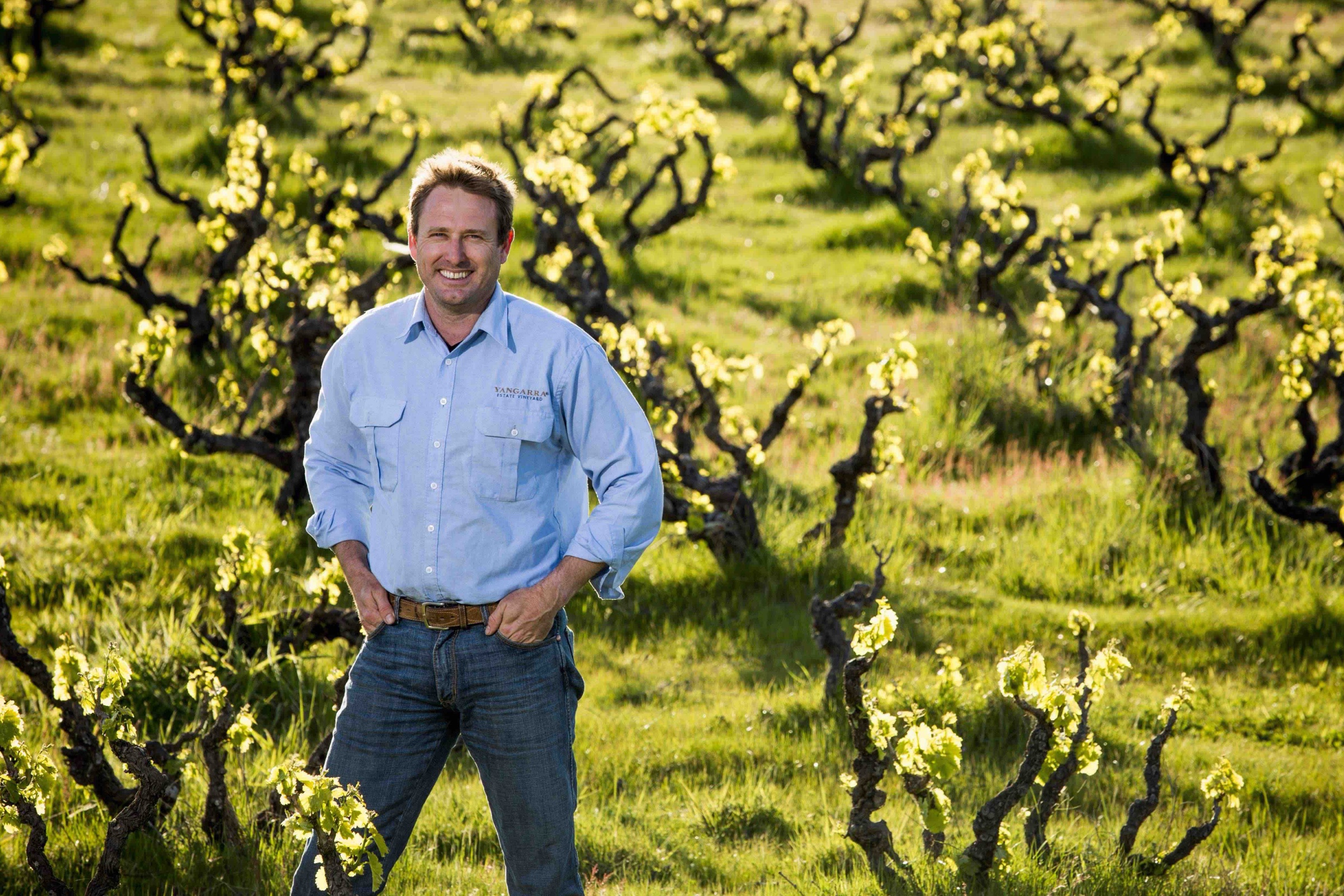
Yangarra Estate’s chief winemaker and manager Peter Fraser. Yangarra Estate
The Australian wine industry is struggling to come to terms with the tragic sudden death of Peter Fraser, chief winemaker and manager of Yangarra Estate in McLaren Vale.
He died in a fire at his home in Clarendon on Thursday, November 27. He was just 51.
The Pete Fraser I knew was a softly spoken and self-effacing guy, a quietly passionate wine man who went about his work with intensity, focus and devotion.Pete was in good form when I last saw him on November 13: little did we know what would transpire two weeks later. He was in Sydney presenting a back-tasting of all 15 vintages of his flagship wine, Yangarra High Sands Grenache.
He’d been hosting the same tasting for the media in other cities as well. In hindsight, it seems like it was his final tour of duty. He was as self-effacing as ever.
“Anyone could make wine at Yangarra, it’s such great terroir,” he’d say.
And when the 2023 High Sands—from a very difficult, wet season—was discussed, he said “It’s one of the wines I’m most proud of.” That’s because it was a year the wine probably didn’t make itself, and skill and experience were needed to deal with the cold, wet conditions when fungal disease flourished in many vineyards.
“From our experience, a cold vintage in a warm region can produce some of the best wines,” he added.
Yangarra’s ‘23s are outstanding, across shiraz, grenache and blends.
“Wines produced from this vintage will be some of the prettiest and most delicate from the estate,” he said.
Under Fraser’s direction, Yangarra transitioned to biodynamic viticulture. It’s been organic since 2007 and certified biodynamic since 2012. He was also an early adopter of ceramic egg fermenters which he used, often in conjunction with older, larger oak vessels, to mature red wines without risking excessive oak pick-up. This was particularly important with grenache, which is easily marked by oak.
Experiments with ‘eggs’ culminated in the release of the Ovitelli, a grenache produced only in ceramic eggs and given extended time on skins post-ferment. This is an AUD $80 wine. Yangarra’s High Sands is the highest priced grenache in Australia at AUD $300. When the wine jumped from AUD $200 to $250 a few years ago I asked Pete why the big jump. His reply was typically candid: it was along the lines of:
“We line up the best Châteauneuf-du-Papes regularly, and taste them. Half of them are spoilt (chiefly by Brettanomyces), and of the other half, we reckon our wine is as good as the best.”
Hard to argue with that.
However, the regular Yangarra wines are very affordable and also of exceptional quality, such as the Yangarra Old Vine Grenache (AUD $50) and GSM (AUD $35).
Peter was chief winemaker and manager at Yangarra, where he’d worked for 25 years, and he was almost a fixture in the Clarendon district as his previous job was at Normans’ Clarendon winery.
His loss is a tragedy, but his contribution to Australian wine will be remembered for a very long time.During his tenure Yangarra’s owners, the US-based Jackson Family Wines, took over the established Hickinbotham Vineyard at Clarendon in 2012 and together with Jackson’s California-based specialist cabernet winemaker, Chris Carpenter, and Yangarra’s viticulturist Michael Lane, Pete developed the spectacular Hickinbotham Clarendon range of red wines.
The Pete Fraser I knew was a softly spoken and self-effacing guy, a quietly passionate wine man who went about his work with intensity, focus and devotion, seriously quality conscious but not afraid to push the boundaries of winemaking. He loved wine: his final Instagram post was a bottle of Bonneau du Martray Corton-Charlemagne 2005 with the words “Might be the best wine I’ve ever drunk.” What a pity it was probably also the last.
His loss is a tragedy, but his contribution to Australian wine will be remembered for a very long time.