


Three wacky fermenters
 Huon Hooke in Three of a Kind
 Become a member to view this article
The Real Review is editorially independent. We don’t sell wine. We are free of influence from vested interests such as wine producers and sellers, and proprietors with conflicts. We tell you what we think about reviewed wines, served straight up. Our articles cover topics our writers choose because of genuine interest.
We rely on our members to publish The Real Review. Membership provides access to thousands of articles, a growing database of more than 160,000 wine tasting notes, exclusive member discounts and more.
Winemakers are a restless bunch, always looking for new ways to make wine, in the quest for something better, or at least different. This often entails reviving old, discarded methods. The present revival of ancient fermenting vessels is an example.
It’s easy to get distracted by the science of how or why these things work, but it’s the subtle taste differences that captivate the winemakers.Baked clay amphorae were used by the ancients before modern materials were available. Small oak vessels, and new ways of using them, are also fashionable. These range from conventional barriques or hogsheads stood on their ends with the heads taken out of them, to barriques with steel doors instead of bung-holes so that skins can be easily filled and emptied, to oddly shaped oak vessels such as Pearles, which Taylors is using to great effect.
It’s easy to get distracted by the science of how or why these things work, but it’s the subtle taste differences that captivate the winemakers.
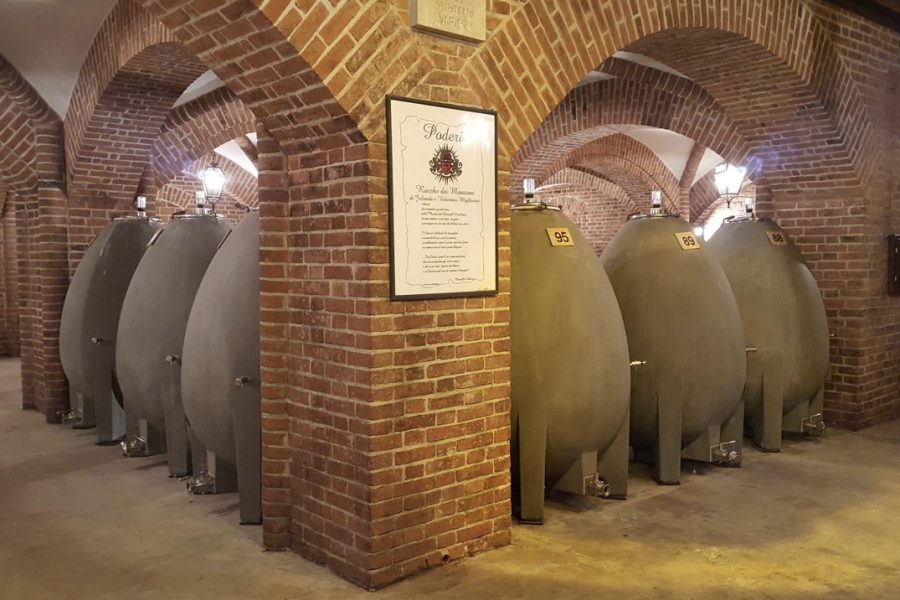
Ceramic eggs at Rocche Dei Manzoni Supplied
The ceramic egg
The egg-shaped vessel is said to enable a naturally circulating convection current which keeps the contents of the fermenter homogenous. Yangarra Estate winemaker Peter Fraser says:
“I really like the uniqueness of the wines that these vessels produce, and they do seem to showcase the varietal flavours in both our roussanne and grenache.
“The vessel seems to produce a level of purity (without oak influence) but without the boringness of stainless steel… I have noticed that fermentation behaves a little differently: the rapid early part of fermentation seems slower, and the slow tail of fermentation is faster, leading to a more even and steady fermentation. I think there is some influence of the slight ingress of oxygen, but not too much. And there are some insulating properties of the ceramic.”
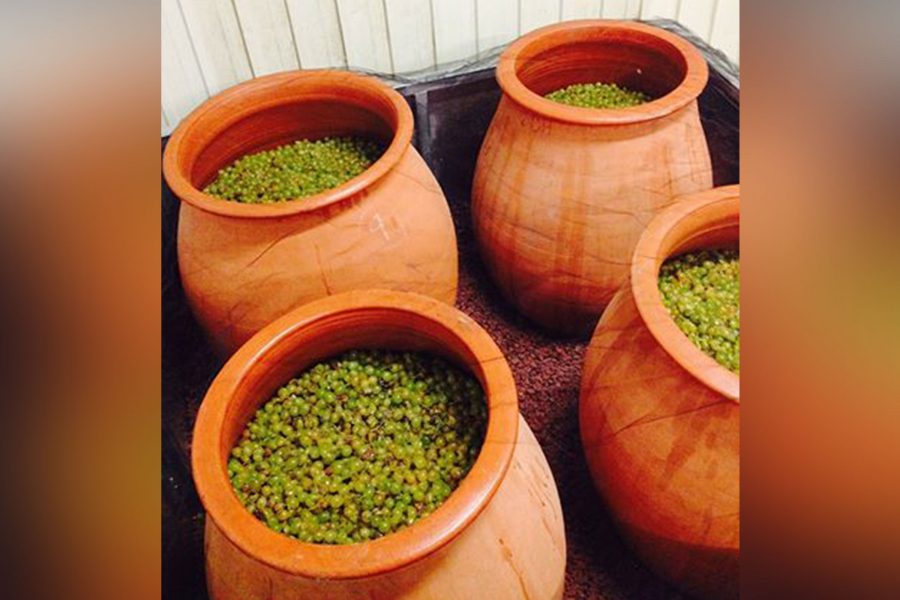
Amphorae at Brash Higgins. Supplied
The amphora
This is an ancient fermenting and ageing vessel, made of baked clay. It’s beeswax-lined for hygiene and to limit oxygen transfer.
Some winemakers say the thick clay walls are a better insulator than steel, keeping a more even temperature, but it’s likely their small volume means temperatures never get too high. Brad Hickey of Brash Higgins tasted wines from Italy made in amphorae and found them challenging, but ethereal and thought-provoking.
Wanting to do something different from traditional Australian methods, he decided nine years ago to eschew oak and steel with his nero d’avola and zibibbo, and now has twenty-eight 200-litre amphorae made by an Adelaide potter from local clay. Higgins says the wax barrier eliminates oxygen transfer, and reduces evaporation and volatility. But he says the wine does contact the clay, and this has a textural effect,
“…adding warmth, vibrancy and a prettiness that I don’t taste often in steel, oak or concrete. The six months our nero d’avola and zibibbo age on skins also has a big impact on the finished wine’s flavour.”
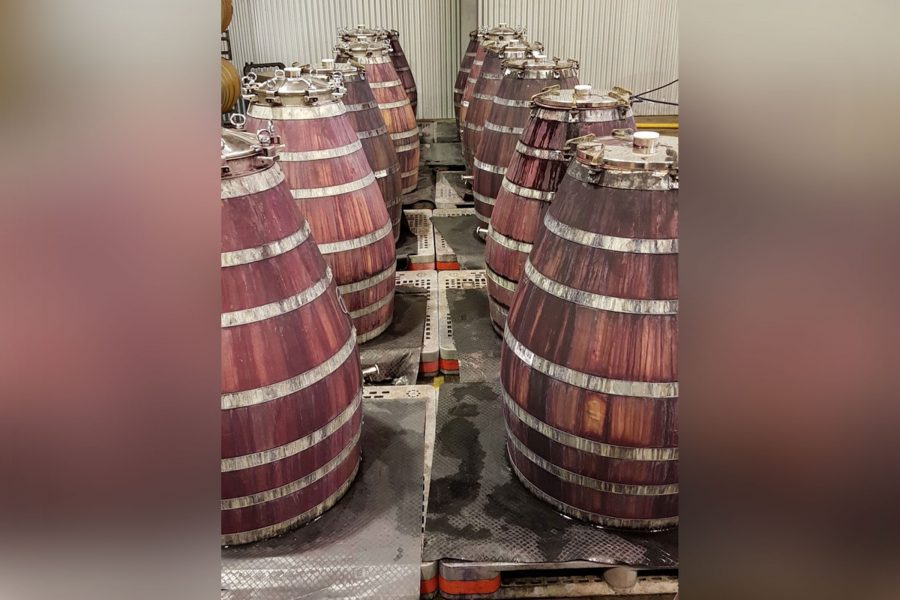
The Pearle fermenters at Taylors Wines. Supplied
The Pearle
This fermenter, which resembles an out-of-shape barrel standing on its end, is like a petite version of a classic Bordeaux fermenting vat, but the much smaller volume gives a greater oak-surface to juice-volume ratio, allowing more oxygen into the ferment and enhancing pick-up of oak extractives. Taylors’ chief winemaker Adam Eggins ferments cabernet and shiraz in them for his The Visionary, The Pioneer and St Andrews wines. These have tight-fitting steel lids and can be used for hygienic, long-term skin contact, leading to softer tannins and enhanced texture.
Says Eggins:
“The Pearle theory is you create a drowned cap so the cap is extracted naturally and gently with less agitation. So, in theory, you keep more perfume.
“What we are seeing from extended skin contact is tannin polymerisation and natural softening, textural layering and palate enrichment – like an increase in density of fruit concentration.
“I thought the fruit would be swamped by the oak, but a few years in, it feels like the oak is encapsulating the fruit or the skin tannins are, protecting the varietal expression.”
As part of TSO Cooperage in Australia – we are in the process of having TSO Acacia Barrels approved by FSANZ. I’m also the Australian distributor of Ikapa Concrete wine vessels