


Sauvignon blanc and semillon: the dynamic duo
 Aaron Brasher in Wine Spotlights
 Become a member to view this article
The Real Review is editorially independent. We don’t sell wine. We are free of influence from vested interests such as wine producers and sellers, and proprietors with conflicts. We tell you what we think about reviewed wines, served straight up. Our articles cover topics our writers choose because of genuine interest.
We rely on our members to publish The Real Review. Membership provides access to thousands of articles, a growing database of more than 160,000 wine tasting notes, exclusive member discounts and more.
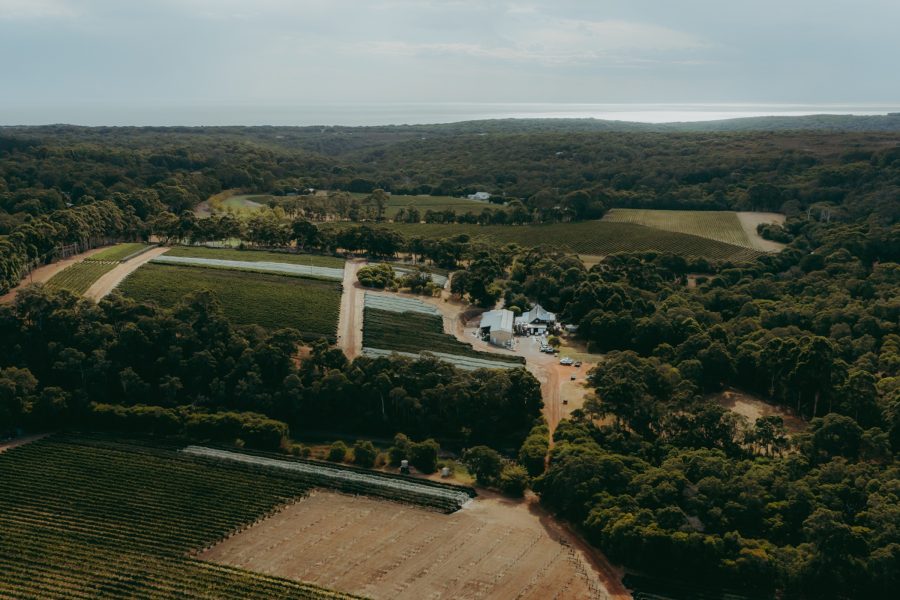
Aerial view of Pierro Wines in Margaret River. Pierro Wines
Guide to Sauvignon Blanc & Semillon Feature Week
A fellow named Aristotle once opined that “The whole is greater than the sum of its parts”. Now, this could well be the philosophy at the heart of the very reason for semillon and sauvignon blanc blends. Like Bogey and Bacall, Torvill and Dean and ‘The Woodies’ (Australian tennis doubles partners), some things just work better when they’re paired up.
Typically, semillon brings richness, a lemony, waxy texture, and ageing potential, whilst sauvignon blanc brings acidity, citrus, and a level of herbaceousness to the table.Semillon and sauvignon blanc flying solo produce outstanding wines, think great aged Hunter semillon and the fabulously punchy and aromatic sauvignon blancs of Marlborough, but what’s the raison d’etre for bringing these two varieties together?
Semillon and sauvignon blanc have been cultivated in Bordeaux, France since before the 1500s and they are the key components in both dry and sweet white wines of the region. The most sought-after and collectible examples include Château Haut-Brion Blanc among the dry whites and Château d’Yquem on the sweet white front.
Typically, semillon brings richness, a lemony, waxy texture, and ageing potential, whilst sauvignon blanc brings acidity, citrus, and a level of herbaceousness to the table, the two together creating a balanced, textural and complex profile.
In Australia in the 1960s, agronomist Dr John Gladstones classified Margaret River as a ‘Bordeaux-like’ region, and encouraged the planting of semillon and sauvignon blanc.
Margaret River has been at the forefront of the style in Australia. Dr Mike Peterkin is credited with producing the first semillon–sauvignon blanc blend in Margaret River in 1979 while making wine for Kevin and Di Cullen. This wine was labelled and sold as a semillon sauvignon blanc and won a trophy at the Perth Royal Show for best full-bodied dry white. Fast forward over four decades and the current iteration of this style is the Cullen Grace Madeline Sauvignon Blanc Semillon 2024, a wine that derives its mouth-feel and complexity from oak, with a lovely drive of creaminess and nuttiness.
Peterkin established his own winery Pierro in 1980, dedicating a third of the vineyard to semillon and sauvignon blanc. His Pierro LTC Semillon Sauvignon Blanc 2023 is a nod to his early accomplishments with the varieties, but some years back he began adding a little touch of chardonnay (LTC) to bring a touch more weight and texture to the blend.
Evans & Tate likewise were another Margaret River pioneer of the style. In 1987, Evans & Tate released the first vintage of their Margaret River Classic, a semillon sauvignon blanc blend, which became a best-seller and helped popularise the style across Australia.
Margaret River stalwart Lenton Brae also began producing semillon sauvignon blanc in 1987 and has consistently produced a wine of great character that absolutely displays its sense of place. The Lenton Brae Semillon Sauvignon Blanc 2024 beautifully combines the two varieties to produce a wine that has plenty of citrus drive, along with a lifted herbaceousness and perky, saline acidity.
Semillon and sauvignon blanc are two bedfellows that really do get the best out of each other.In the mid 1980s across the country in the Yarra Valley, Dr John Middleton at Mount Mary was making a wine in a homage to the white wines of Graves in Bordeaux. Mount Mary Triolet was first produced in 1987, blending sauvignon blanc, semillon and muscadelle to produce a wine of power, complexity and real ageability. The latest version of Mount Mary Triolet 2022 is a wonderfully complex wine, elements of barrel ageing and time on lees doing wondrous things with the lemony, nettly fruit.
And just to show that there is some versatility with these varieties and that it’s not just about the glamour regions, De Bortoli produces a great value for money example from the Riverina. The De Bortoli Sacred Hill Semillon Sauvignon Blanc 2024 is all light and crunchy, with a decent lick of acidity that keeps the ripe and sweet tropical fruits in check. And at only $9 a bottle you can’t go wrong.
Semillon and sauvignon blanc are two bedfellows (or should that be blendfellows?) that really do get the best out of each other. That Aristotle fellow may have been onto something.