


Sauvignon blanc vs semillon: what sets them apart?
 Huon Hooke in Wine Spotlights
 Become a member to view this article
The Real Review is editorially independent. We don’t sell wine. We are free of influence from vested interests such as wine producers and sellers, and proprietors with conflicts. We tell you what we think about reviewed wines, served straight up. Our articles cover topics our writers choose because of genuine interest.
We rely on our members to publish The Real Review. Membership provides access to thousands of articles, a growing database of more than 160,000 wine tasting notes, exclusive member discounts and more.
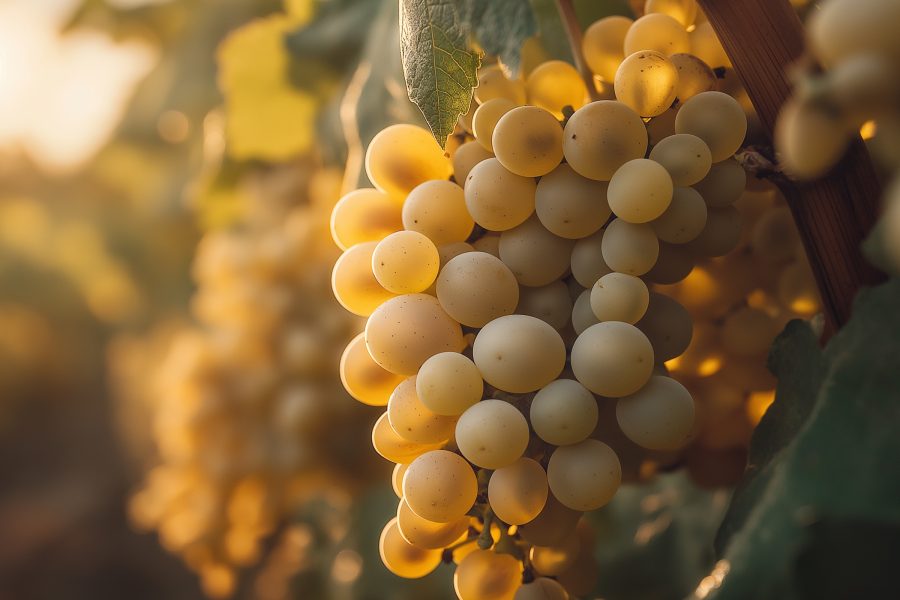
Semillon has a wonderful track-record of ageing gracefully. Made in Pokolbin
Guide to Sauvignon Blanc & Semillon Feature Week
Highly aromatic versus less aromatic.
Sauvignon blanc is a highly aromatic grape variety whose fragrance is a major part of its appeal. (Talking only of the young—and unwooded—wine in both cases for now.) Semillon is less fragrant, a bit like garganega in Soave, it is a sotto voce wine and by virtue of this, is very adaptable with food and with drinking situations: it doesn’t compete with the food on your plate, and it doesn’t demand attention.
Drinkers who are captivated by the aromatics will easily fall for sauvignon blanc but those who value the structure and feel of the wine in the mouth may punt for semillon.We might even observe that semillon is a more serious wine because it depends more on the palate than the nose: drinkers who are captivated by the aromatics will easily fall for sauvignon blanc but those who value the structure and feel of the wine in the mouth may punt for semillon. A member of the semillon fan club might suggest that sauvignon blanc is like a person with heavy make-up, initially captivating but maybe disappointing on closer acquaintance, where semillon is less showy but ultimately more satisfying!
Sweetness is a factor
Marlborough sauvignon blanc is often quite sweet, which is part of its very wide appeal—which crosses all boundaries, national and otherwise. Semillon is usually made dry or near-dry. It’s an old cliché but one that holds true: residual sugar can hide imperfections such as lack of fruit/flavour intensity, but in a dry wine ‘there’s nowhere to hide’. At the risk of sounding like some kind of elitist, its dryness tends to cement its appeal with serious wine lovers, whereas sweetness enables wines to appeal to less discriminating drinkers.
The aroma bases are different
Sauvignon blanc, whether grown in the Upper Loire Valley (Sancerre, Pouilly-Fumé and other appellations), Marlborough, the Adelaide Hills or South Africa’s Cape, has intense tropical fruit aromas when ripe, suggesting passionfruit, feijoa, guava, kiwifruit, but also citrus fruits (lemon, lime, Cape gooseberry, yuzu, fingerlime). Semillon on the other hand tends to be less pungent and more limited in its range of aromas: lemon is the dominant note, but also lime, lemongrass and green apple.
The herbaceous aromas (snow-pea, pea-shoot, cut grass, green capsicum) for which some sauvignon blanc (and semillon) is known are a symptom of underripe grapes. That’s not to say a subtle note of these can’t be attractive as part of a bouquet.
Semillon grown in the Hunter Valley can be physiologically ripe at very low Baumé (sugar ripeness) and in successful seasons and good vineyards it doesn’t display the greener aromas. Local winemakers frown upon those nuances. In Margaret River and other places semillon often smells and tastes green and underripe, sometimes even at quite high degrees of sugar ripeness. This suggests either the wrong clone, an unsuitable site, or over-cropping. The unique suitability of the Hunter for semillon is that the grapes can be flavour-ripe at low Baumé (and therefore low alcohol. 10 to 11.5% is the normal range).
Oak compatibility
The opinions that follow are mine, and not everyone will agree!
Neither semillon nor sauvignon blanc taste good when green and underripe, and that lack of appeal is exacerbated when the wine is fermented or aged in oak barrels. The taste (and scent) of oak is a very unhappy marriage with the smell (and taste) of vegetal/green fruit.
However, some of the greatest dry white wines in the world are produced from these grape varieties fermented and aged in oak. Think of the famous Graves and other dry whites of Bordeaux: Pavillon Blanc de Château Margaux, Domaine de Chevalier Blanc, Smith-Haut-Lafitte Blanc, etc. And closer to home: Cullen Grace Madeline, Moss Wood Ribbon Vale Elsa Sauvignon Blanc, Mount Mary Triolet, Domaine A Lady A, and more. The difference here is the grapes were grown in a suitable place, the vines were mature and the fruit was fully ripe. Any white grape will produce a green-tasting wine if the fruit is harvested underripe. There is nothing clever or appealing about that.
There are more successful examples of wooded sauvignon blanc than semillon: indeed, it is hard to think of a single one. There are a few semillons where a (usually) small proportion of oak fermented wine can work well, but it has to be very subtle. Rockford, Alkina and Château Tanunda in the Barossa do this well.
Murray Tyrrell was a great hater of wooded Hunter semillon and he was probably right!
Some of the greatest dry white wines in the world are produced from these grape varieties fermented and aged in oak.Ageing potential
Semillon has a wonderful track-record of ageing gracefully and transforming into something quite different but seriously compelling during many years of bottle-ageing. Sauvignon blanc on the other hand doesn’t usually reward cellaring, but there are notable exceptions. Those barrel fermented versions mentioned above, for a start. The famous dry whites of Bordeaux can be very long lived. Ripeness and flavour concentration are factors: thin, dilute wines never age well. Neither do excessively green, herbaceous wines.
Dry, unwooded, low-alcohol Hunter semillon is again an exception: it is one of the best dry whites in the world for ageing.
Most Marlborough sauvignon blanc is best young, but I have tasted a vertical of Cloudy Bay that showed they age surprisingly well. But whether they change in a way that justifies their cellaring is another question altogether.