


Fashion of the whisky finishing school
 Huon Hooke in Opinions
 Become a member to view this article
The Real Review is editorially independent. We don’t sell wine. We are free of influence from vested interests such as wine producers and sellers, and proprietors with conflicts. We tell you what we think about reviewed wines, served straight up. Our articles cover topics our writers choose because of genuine interest.
We rely on our members to publish The Real Review. Membership provides access to thousands of articles, a growing database of more than 160,000 wine tasting notes, exclusive member discounts and more.
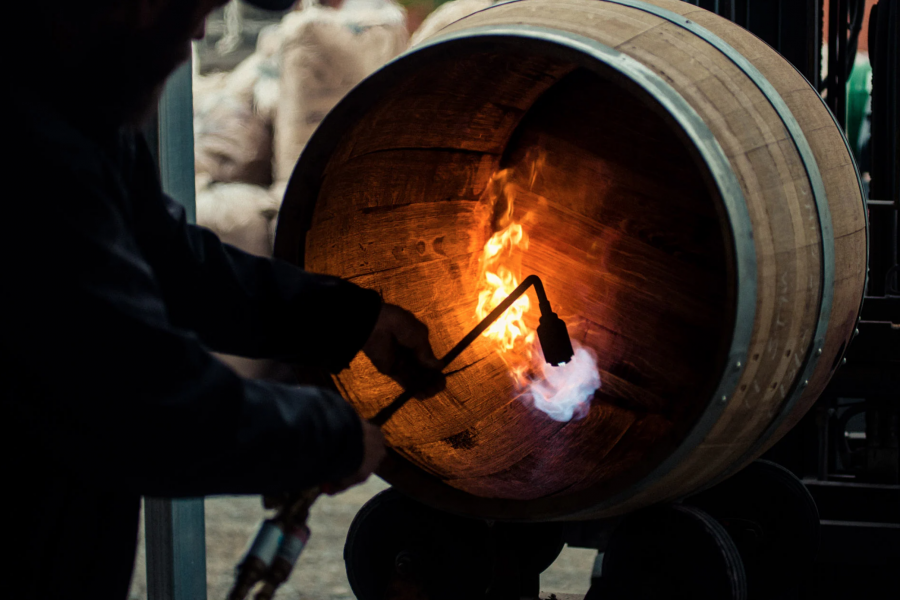
Whisky are being promoted on the selling-point of the rare and special wine barrels they’re finished in. The Scotch Malt Whisky Society
There’s a bit of a fuss going on in malt whisky circles about the fashionable practice of ‘finishing’ whiskies in barrels that previously held prestigious wines.
Last year, I wrote excitedly about the Lark Distillery’s Rare Cask Series Tasmanian whisky, finished in Seppeltsfield 100 Year Old Para Vintage Tawny casks. I loved the spirit, if not the AUD $1,000 price tag.
“There’s too much focus on cask type rather than actual spirit quality. They’re using it to hide young spirit.”- Matt BaileyI’ve also enjoyed various Scottish malts that have been finished in Sherry or Madeira barrels, even Puligny-Montrachet barrels, some of them rare editions costing thousands of dollars. And Morris of Rutherglen released a lovely malt whisky last year which was finished in Morris muscat barrels.
The beef with these malts is that the age of the spirit is seldom revealed; instead, they’re promoted on the selling-point of the rare and special wine barrels they’re finished in. Finishing means they go into those barrels for the last year or so of their ageing, sometimes not even that, and the residue of wine in the oak is said to impart a special character to the whisky.
I asked Matt Bailey, the Australian representative of the Scotch Malt Whisky Society, about this and he said:
“It is deceptive consumer practice to promote the type of cask to the exclusion of the spirit quality.
“There’s too much focus on cask type rather than actual spirit quality. They’re using it to hide young spirit.”
This is the nub of the matter. The spirit can be quite young but the prices these limited-production malts sell for can be just as high as extensively aged malts.
A reader who loves his malts recently wrote to me raising this concern.
“There appears to be a great sleight of hand going on in the whisky industry,” he wrote.
“I am referring to the prices charged for the now ubiquitous bottles of the spirit on the grounds that they have been matured in a variety of casks that previously held differing wines.
“My claim that this is a sleight of hand arises from my understanding that whisky may be sold after 3 years in barrel and that as none of these many casked offerings claim an age they are probably little more than the minimum. This means they are being sold for prices similar to or exceeding aged single malts. That would be a great profit item for the distillers and would be confusing for the drinkers, most of whom would believe they are getting an aged whisky for their money.”
There’s little doubt that many less-experienced whisky drinkers are reassured by the numbers on the label. They feel they’re getting their money’s worth if the label proclaims 8, 10 or 20 years.
In Scotland and a few other countries, a spirit has to be aged for at least three years in cask to be called whisky. In Australia and in most countries, it’s two years.
But a brief chat with Matt Bailey revealed that the ageing trajectory of whisky spirit is not the same everywhere.
“A warm, high-humidity climate, especially one where there’s big diurnal fluctuation in temperature, helps the spirit age quickly. In Tasmania, it can be zero overnight but 27 degrees in the day.”
As my correspondent said, these fancy barrel malts look like a golden opportunity for the spirit industry to fleece the unwary consumer, especially in the captivity of the duty-free shops.
On the other hand, we could take the view that the distillers and their marketers are challenging the drinkers to put their taste-buds on the line and decide whether the whisky is worth the price on taste alone.