


Talking viticulture and winemaking with Dry River’s Wilco Lam
 Bob Campbell MW in Five Questions
 Become a member to view this article
The Real Review is editorially independent. We don’t sell wine. We are free of influence from vested interests such as wine producers and sellers, and proprietors with conflicts. We tell you what we think about reviewed wines, served straight up. Our articles cover topics our writers choose because of genuine interest.
We rely on our members to publish The Real Review. Membership provides access to thousands of articles, a growing database of more than 160,000 wine tasting notes, exclusive member discounts and more.
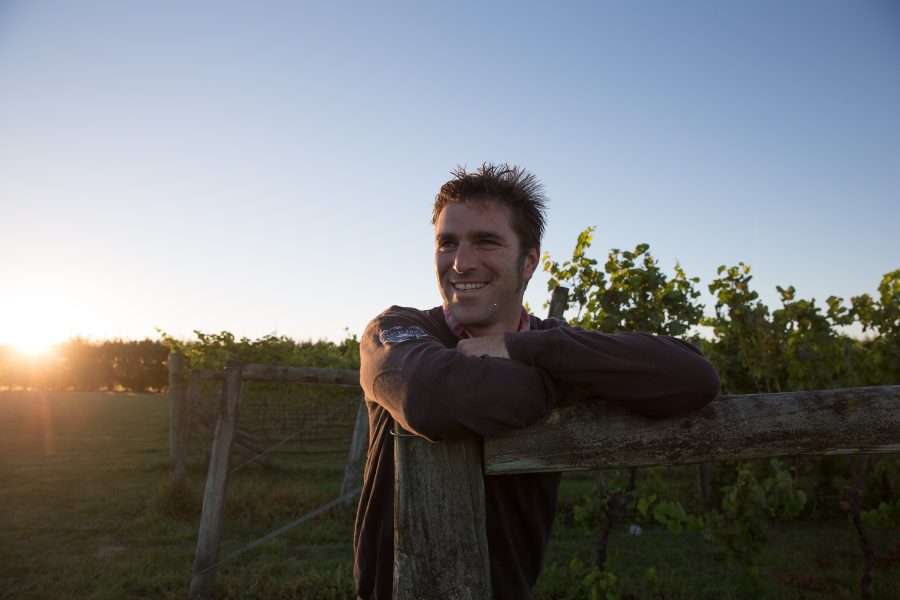
Dry River winemaker Wilco Lam. Supplied
Dry River winemaker, Wilco Lam, talks about fruit exposure, organic viticulture, reduced extraction, the importance of dry farming and refinements in both vineyard and winery in his endless quest to build better wines at this iconic Martinborough winery.
“Dry farming is fundamental to our wine style and at the root of our philosophies. It brings an inherent quality and depth to the wines.” – Wilco LamBob Campbell MW: Dry River founder Dr Neil McCallum, believed in the controversial technique of stripping the leaves off the fruiting area of the vine for maximum light exposure. Some called him the exposure extremist. Have you continued the practice since you took over?
Wilco Lam: We have continued with the practice, though a little less extreme. We see major benefits with this practice in fruit quality regarding the development of certain tannins, strength and stability of acidity (mainly malic acid) and disease control. Besides the high exposure through leaf removal, Neil used to also have white reflective mulch underneath the vines (pinot noir, syrah and some riesling) to further increase the (UV-B) exposure. The mulch was removed after the 2014 vintage due to conflicts with both organic management and in my eyes an over-exposure impacting aromatic development. We also have delayed the timing of leaf pluck by about 10 days to avoid taking too much photosynthetic capacity away from the vine from the end of flowering to set.
BC: Any other changes in the vineyard and winery since Neil left?
WL: Yes, plenty. This is ongoing and with slow steps, as we would like to continue to learn, improve and never stay static in our developments. However, we cannot lose sight of our heritage and kudos, which has been carefully built up over the last 35 to 40 years. The vineyard has been moved into an organic management regime and is in Biogro certification. Furthermore, we are learning to “farm” with our land, judiciously working with soil and cover crops for nutrient recycling, carbon sequestration and increasing the insect population. Gone are the days of mowing a grass strip. We would like to think we are increasing diversity, resilience and life in our vineyards.
In the winery the handling of the fruit is like in the vineyard; an open view to each vintage, relying on vineyard health and strength and the decisions we have made in the last few years. Since 2013 we have started to work with spontaneous fermentation, adopted fully since 2016 on all varieties. The white varieties now generally see extended lees contact and longer fermentation times. For the red wines, we have reduced the extraction techniques during ferment, which are now mostly pump-overs (depending on the year). This is also because the fermentation and skin times are longer. Less is more. I think the results have really started to show since the 2017 and 2018 vintage.
BC: How important is no irrigation, old vines and low cropping levels to wine quality and the Dry River style?
WL: Dry farming is fundamental to our wine style and at the root of our philosophies. It brings an inherent quality and depth to the wines. We, I, do not believe in the irrigation of (cropping) vines. The practice has one reason only: to sustain a certain yield. For us, it is not the main concern, it is reflection and individuality. We meet our targets of 30hl/ha for pinot noir in most years, given there is no frost or adverse flowering conditions. However, we certainly feel the effects of cumulative drought (eg consecutive years like 13, 14, 15 and 16, with the latter two showing the effects more noticeably).
The principle of no irrigation is that there is no way to ameliorate the conditions of the vintage, the vines will express the impact of the environment in its purest form, the challenge for us is to farm sensibly every year to maintain vine longevity. The most difficult part in New Zealand is having access to drought resistance rootstocks. For many years they did not exist here, it is only recently that they started to come through. With water becoming a luxury item, surely this is on the front of the industry’s mind?
Old vines and low cropping is a more contentious debate. We do not crop for the first four years (of establishment), we then slowly start cropping our vines, often not to full Dry River standards until year 10. Thus, cropping levels, vine age, irrigation, vine material and plant spacing are instrumental to achieve our goals. In the end, everything we grow and produce in the vineyard must be at a standard we set for ourselves. We will not allow for inferior quality and then introduce a label to cope with the drop in standards.
BC: Tempranillo came and went after four vintages and has now found a home in your unconventional blended red The Twelve Spies. What was the inspiration behind that label?
WL: Mas de Daumas Gassac. This wine changed my view on unconventional blends. We have been thinking about ways to keep our winemaking spirit keen through experimentation, pushing our own boundaries and expressing a pioneering attitude. In my short experience, Martinborough tempranillo lacks the extra dimension and it lacks consistent heat to ripen a full-bodied wine, so I prefer to see it as a component of something.
With new pinot noir plantings in our vineyard and an overcrowded second-tier pinot noir market, we were also interested to find new ways to include and arouse our followers’ wine cravings by producing a new individualistic wine, not bound by convention or historical precedent. After a few brainstorm sessions, we decided to highlight our company crest, depicted on this label, from an image called the Twelve Spies of Canaan. It shows Caleb and Joshua carrying a large bunch of grapes, as two of twelve spies who were set out by Moses to explore the land of Canaan. With the concept of wine and label more or less formed, we started experimenting with blends, and this is the outcome. The blend proportion is likely to change from year to year. It is exclusively distributed by Negociants New Zealand for on-premise only.
BC: Any other planned additions to the vineyard area or product range?
WL: No new land or product additions are on the horizon currently. However, we have started a re-planting regime to increase our pinot noir production. We currently farm three hectares of pinot noir (a third of our production, 700 to 900 cases). We are aiming to increase this by 40%. To do so, we are using vine cuttings from our own Dry River Estate vineyard, and growing these up in the nursery, on drought-tolerant rootstocks, in order to continue the Dry River story through the eyes of our own vines.