


Dr Richard Smart, 1945-2025
 Huon Hooke in Free for all
 Become a member to view this article
The Real Review is editorially independent. We don’t sell wine. We are free of influence from vested interests such as wine producers and sellers, and proprietors with conflicts. We tell you what we think about reviewed wines, served straight up. Our articles cover topics our writers choose because of genuine interest.
We rely on our members to publish The Real Review. Membership provides access to thousands of articles, a growing database of more than 160,000 wine tasting notes, exclusive member discounts and more.
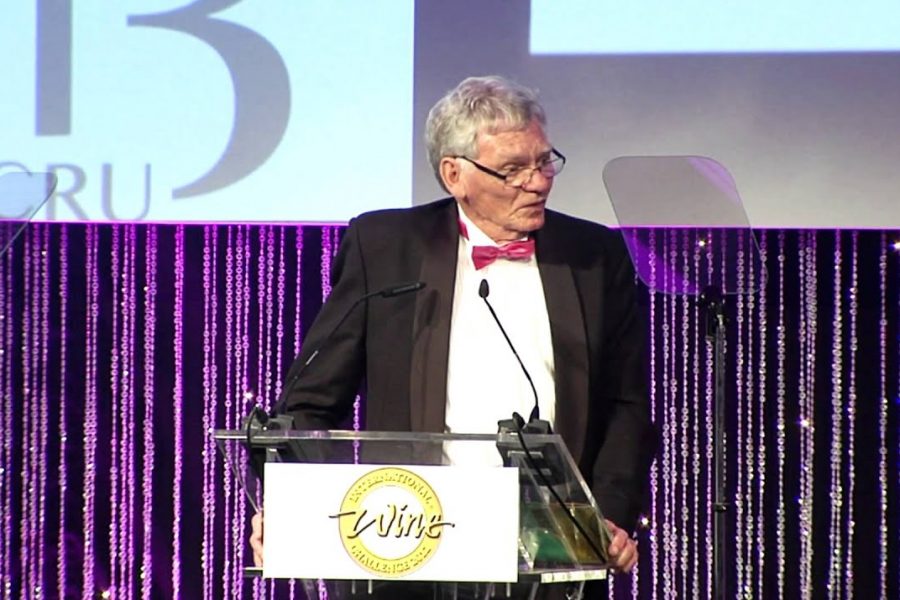
Dr Richard Smart. International Wine Challenge YouTube
Ring the bells out loud, for the king is dead. The king of viticulture, that is. Dr Richard Smart, globally influential viticultural consultant, educator, writer and sage, passed away on July 2 after a long battle with cancer. He was 80.
Smart’s greatest contribution was his work on canopy management, which helped many winegrowers produce better wine.Dick Smart, as he’ll forever be known to his students at Roseworthy Agricultural College, made an enormous contribution to the wine industry worldwide and managed to keep working well into this, his final year, in spite of the difficulties inflicted by five bouts of cancer of the mouth, the first episode being nearly 40 years ago.
Smart’s greatest contribution was his work on canopy management, which helped many winegrowers produce better wine. Perhaps nowhere did this have a more graphic impact than in New Zealand, where he went after his stint teaching at Roseworthy.
My classmates and I were fortunate to have Smart as our viticultural lecturer immediately before his departure for Kiwi-land. (Peter Dry was equally important lecturing in viticulture at Roseworthy, concurrent with Smart). Smart stressed the fundamental importance of sunlight in the vine canopy, dappled sunlight on the grape bunches themselves and shallow leaf depth within the canopy. He measured the number of leaves in the canopy and showed how this influenced grape quality: too many leaves and the shaded leaves yellowed and withered, and far from contributing anything to the system, were ‘passengers’. Therefore winegrowers should limit the depth of leaves in the canopy to three or four.
An efficient vine canopy with sunlight penetration resulted in enormous improvements in wine, especially in New Zealand where most red wines up to the 1980s were vegetal, thin and poor, with a lot of pyrazine character. Suddenly, New Zealand began producing far better reds with good colour, body and ripe flavours.
Smart’s seminal book Sunlight into Wine: A handbook of winegrape canopy management, co-authored by Mike Robinson and published in 1991, was a game-changer. He also developed trellising systems with good canopy management in mind.
He also showed how canopy management could improve yields to more sustainable levels without loss of quality.
Smart always challenged people, including we wine writers. He chided us for giving too much recognition to winemakers, too many awards and too many column centimetres, asserting that viticulturists were the real kingpins of wine quality. I hope he would have approved of The Real Review’s decision to award a Vigneron of the Year—which we inaugurated this year—and not another ‘winemaker of the year’ award.
Smart’s seminal book Sunlight into Wine: A handbook of winegrape canopy management, co-authored by Mike Robinson and published in 1991, was a game-changer.Ever concerned about climate change, he chided winemakers for allowing fermentation CO2 to escape into the atmosphere, instead of capturing it for re-use.
He challenged the wine industry to slash its carbon footprint in other ways, such as using lighter bottles or alternatives to glass.
No doubt spurred by his own experience with cancer of the mouth*, he warned of the cancer risks of intensive wine-tasting, and attempted to interest pharmaceutical companies in developing a mouth-wash for nullifying cancer-causing acetaldehyde.
Earlier on, Smart encouraged double-pruning which delayed the vine’s growth cycle enabling warm-climate growers to harvest their grapes later in the autumn thus benefitting from cooler ripening weather, giving wines ‘cooler climate’ characteristics.
For a more comprehensive review of Dick Smart’s life, works and achievements, I recommend Jancis Robinson and Julia Harding’s article.
*NB: Dr Smart had also been a smoker for much of his early life.