


Celebrating Champagne at The Charles Brasserie & Bar
 Huon Hooke in Wine Events
 Become a member to view this article
The Real Review is editorially independent. We don’t sell wine. We are free of influence from vested interests such as wine producers and sellers, and proprietors with conflicts. We tell you what we think about reviewed wines, served straight up. Our articles cover topics our writers choose because of genuine interest.
We rely on our members to publish The Real Review. Membership provides access to thousands of articles, a growing database of more than 160,000 wine tasting notes, exclusive member discounts and more.
-
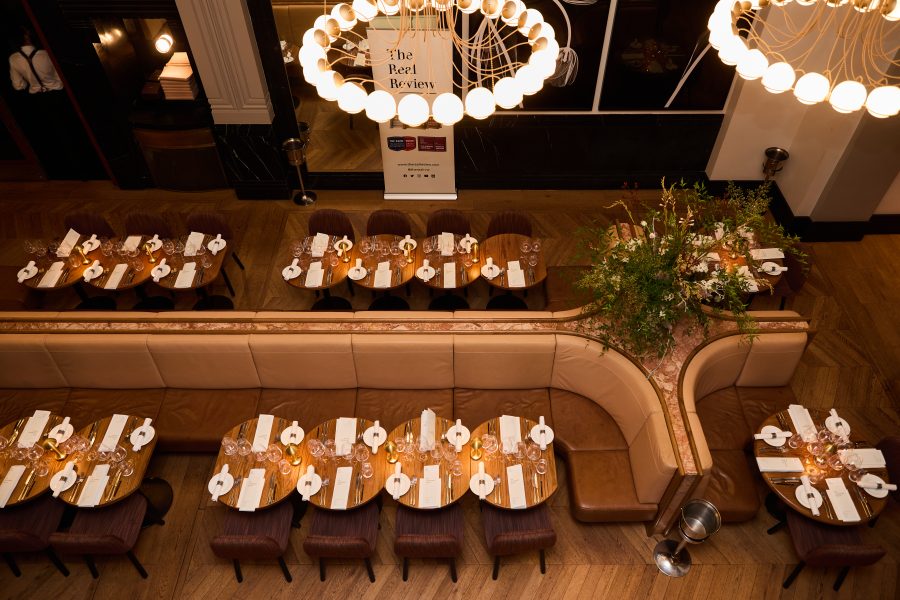
- The dining room is ready at The Charles for the Champagne Dinner. The Real Review
-
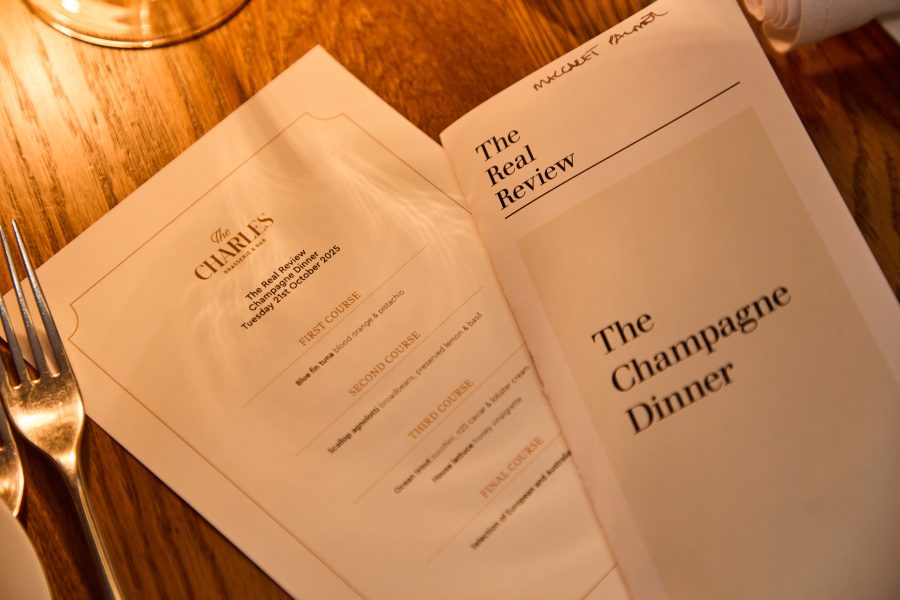
- Menu and wine list for the evening. The Real Review
-
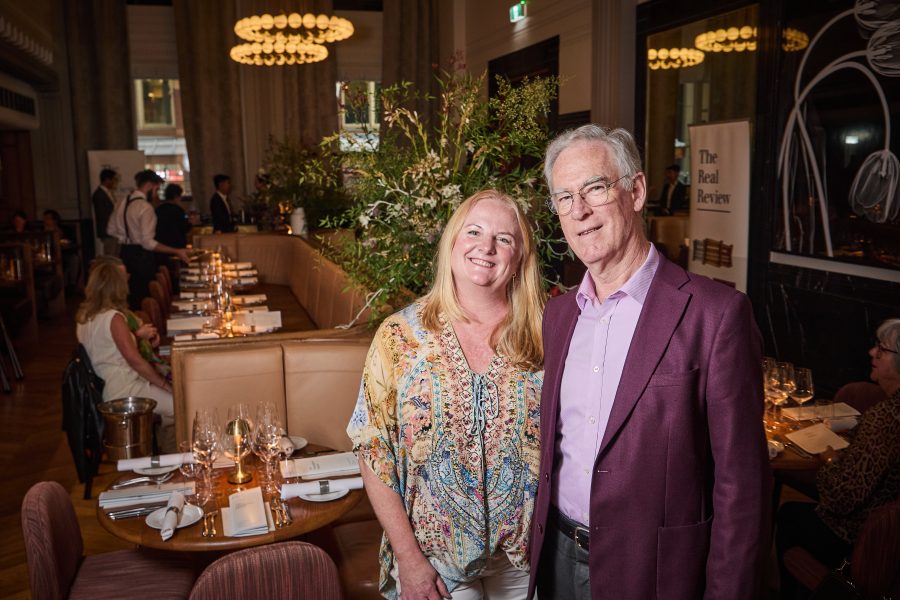
- The Real Review contributors Huon Hooke and Melissa Moore pose for a photo before dinner. The Real Review
-
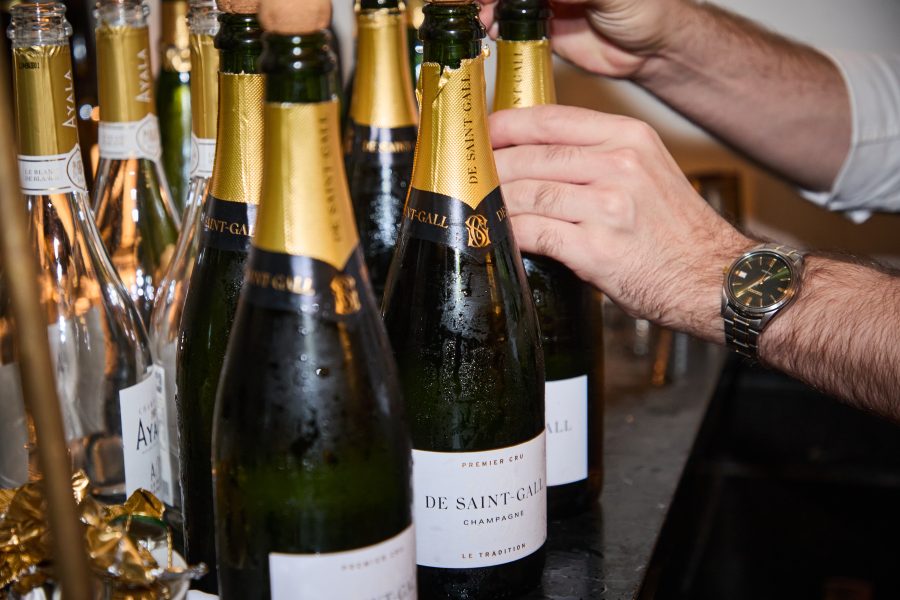
- Corks are popping at The Charles for the Champagne Dinner. The Real Review
-
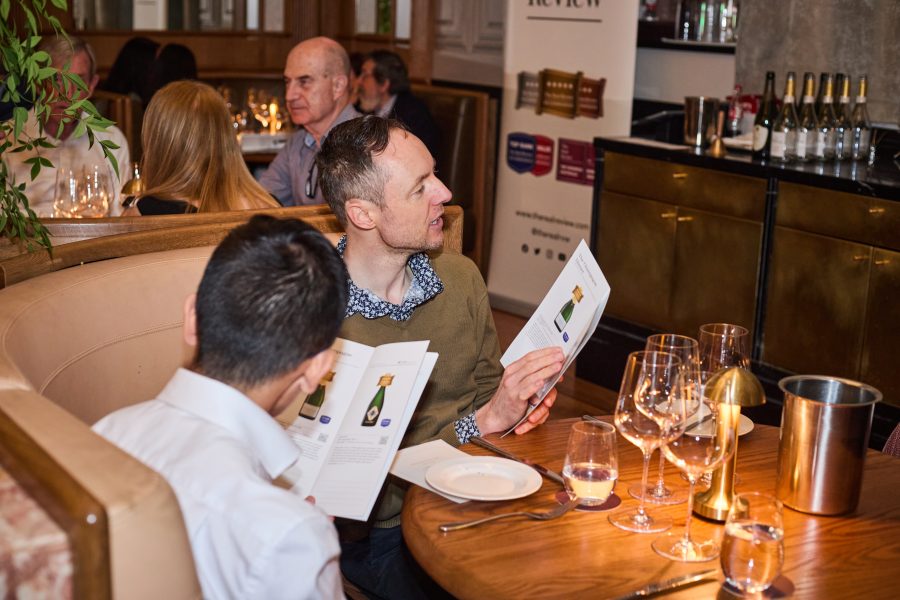
- Guests study the Champagnes to be served during the evening. The Real Review
-
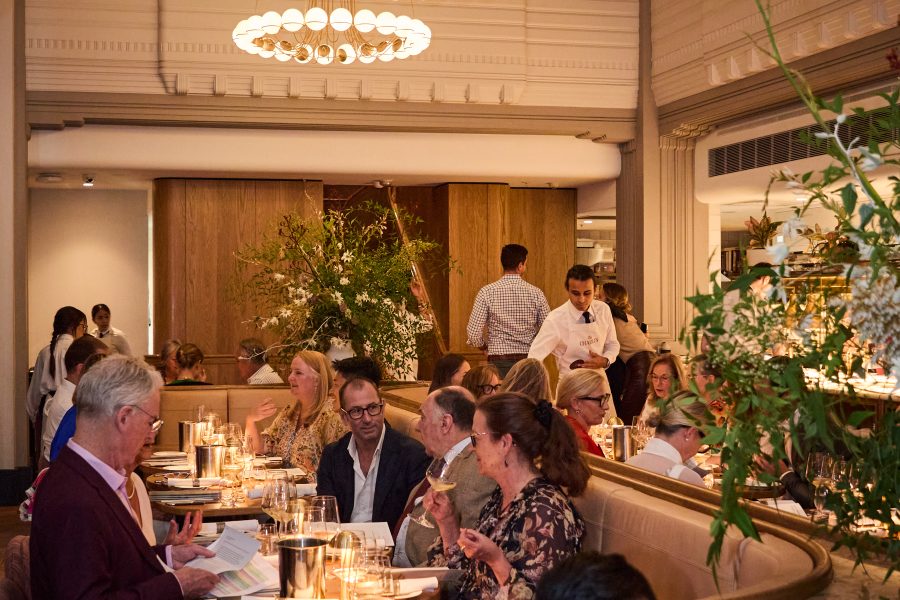
- The room buzzes with conversation at the Champagne Dinner. The Real Review
-
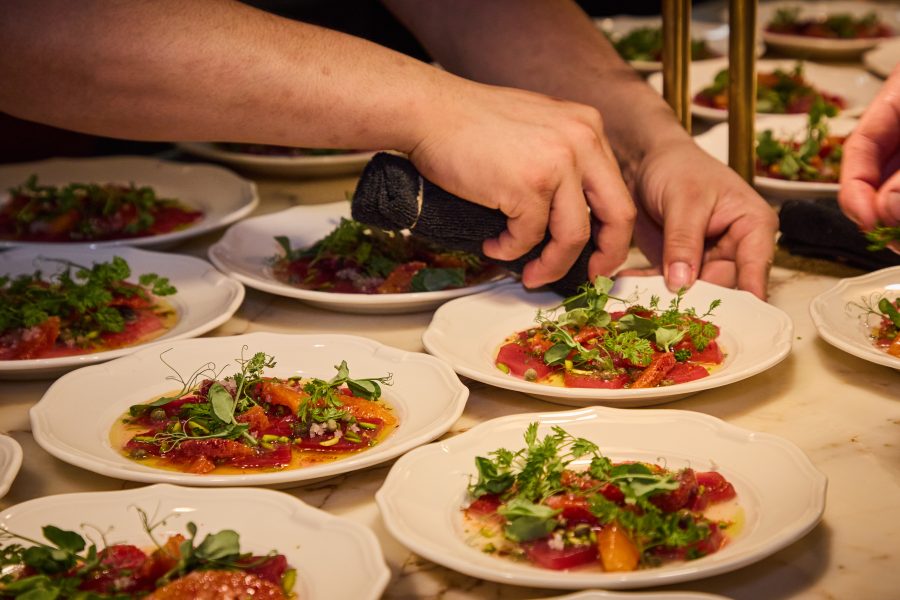
- Plating up at The Charles. The Real Review
-
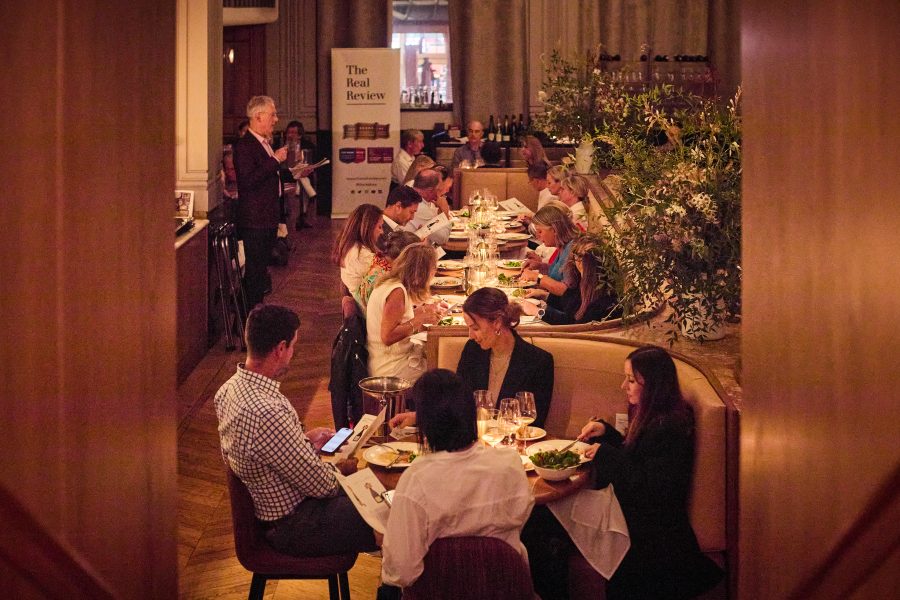
- Huon Hooke presents to a full room at The Charles. The Real Review
-
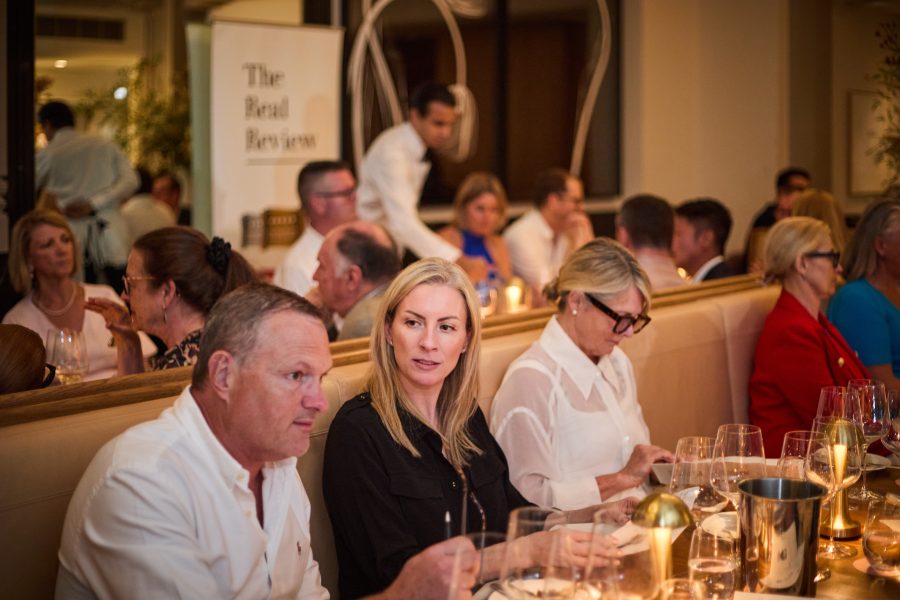
- Guests in conversation at the Champagne Dinner. The Real Review
-
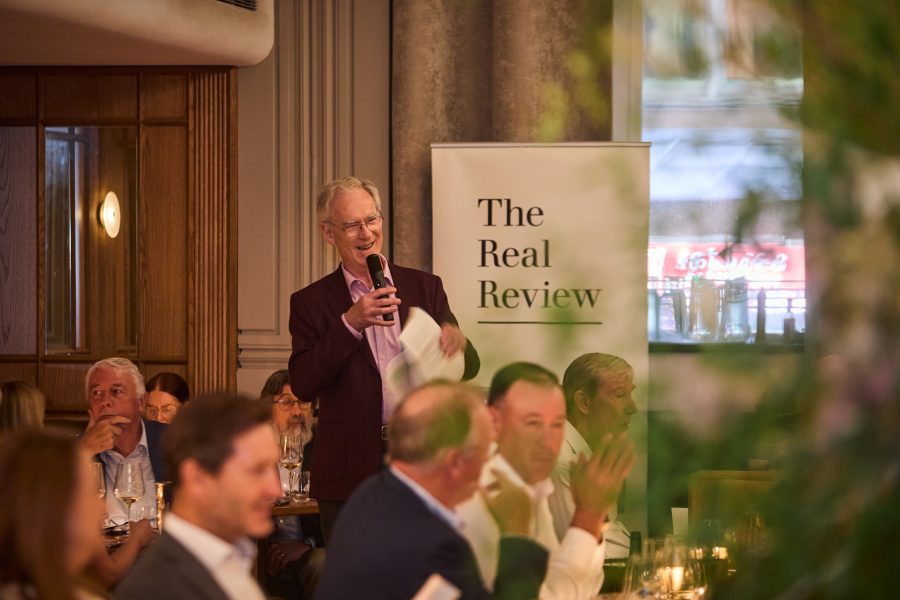
- Huon Hooke entertains the room. The Real Review
-
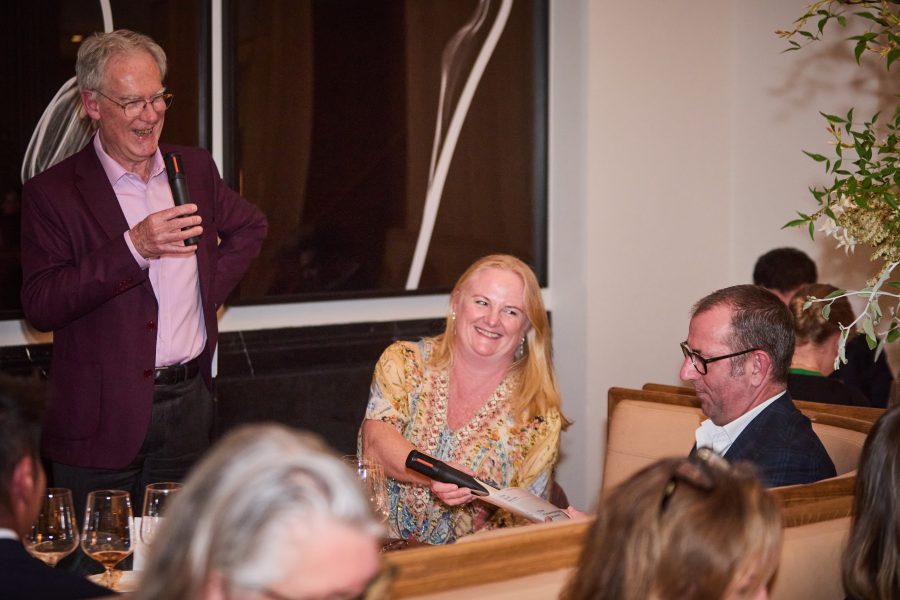
- Huon Hooke, Melissa Moore and Aaron Brasher share a presenting moment. The Real Review
The Real Review’s annual champagne dinner on October 21 was an appropriate warm-up for International Champagne Day on October 24. As F. Scott Fitzgerald wrote in The Great Gatsby:
The venue was The Charles Brasserie & Bar in central Sydney, where 55 guests enjoyed the sparkling service and splendid fare.“Too much of anything is bad, but too much champagne is just right.”
Well, with small pours of nine wines, we didn’t overdo it.
The venue was The Charles Brasserie & Bar in central Sydney, where 55 guests enjoyed the sparkling service and splendid fare. We began with a brace of blancs de blancs with the first entrée, then a pair of high-level non-vintage wines with the second entrée, then a pair of older and fuller wines with main course, and finally a diverse trio of special wines with cheeses.
First course
Blue fin tuna with blood orange and pistachio
Wines
Blanc de blancs is a niche champagne, but increasingly popular. Probably less than 10% of champagne is marketed as blanc de blancs and most of them are pure chardonnay wines. But they are the crispest, raciest and most refreshing wines, especially suited to fish and seafoods served as entrées. And the raw tuna with its citrus dressing and crunchy pistachio garnish was sensational with these two wines, both of which were appetisingly dry, each liqueured to about 5 grams per litre and therefore Extra Brut.
The Fourny was crisp and lemony but also showing some toasty tertiary complexity, and great value at around $80; the Ayala pristine and vibrant with impeccable line and length. The Fourny is a Vertus premier cru, the Ayala a blend of grand and premier crus. Premier crus make up just 17% of champagne vineyards, grand crus 14%, so these were both special wines. An exciting start to the evening.
Second course
Scallop agnolotti with broad beans, preserved lemon and basil
Wines
This was another wonderful dish, little bundles of pasta bursting with scallop meat and lifted by the citrus and herb in the sauce.
De Saint-Gall is a new brand to our tasting panel with a superb range of wines, this one marvellously fresh and vibrant with chardonnay-driven vitality and depth of honey, butter and pear flavours. A 64/36 chardonnay/pinot noir blend, it comes from a high-level co-operative whose growers only have grand and premier cru vineyards.
Pommery is more familiar brand but the Apanage range is a higher level of quality, age and price than the entry-level Brut Royal NV. It’s a complex blend of wines from 2018, 15 and 12, plus réserve perpetuelle. It’s named 1874 because that’s the year Madame Pommery created the Brut style of champagne. It has terrific depth of citrus blossom and iced pastry flavours and aromas.
-
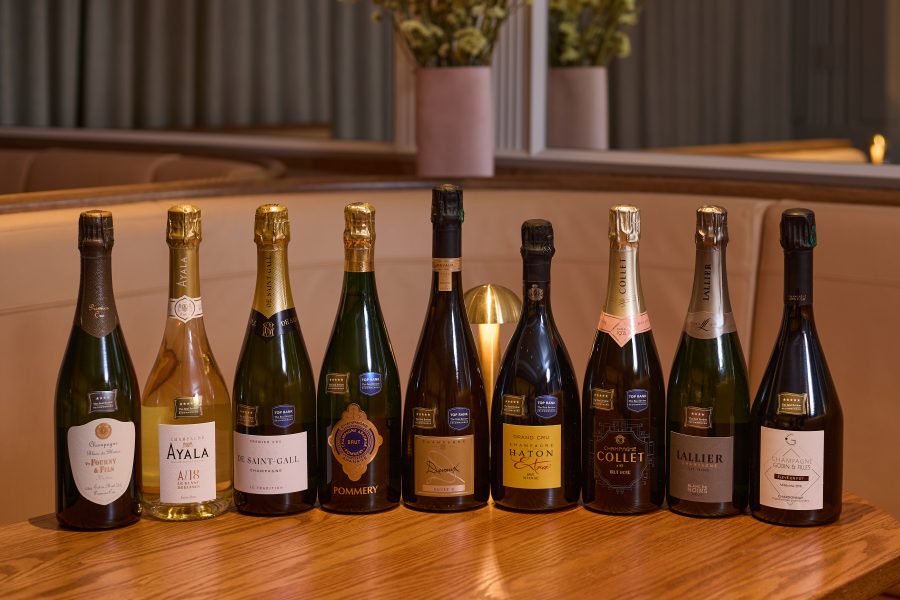
- The Champagne lineup for the evening. The Real Review
-
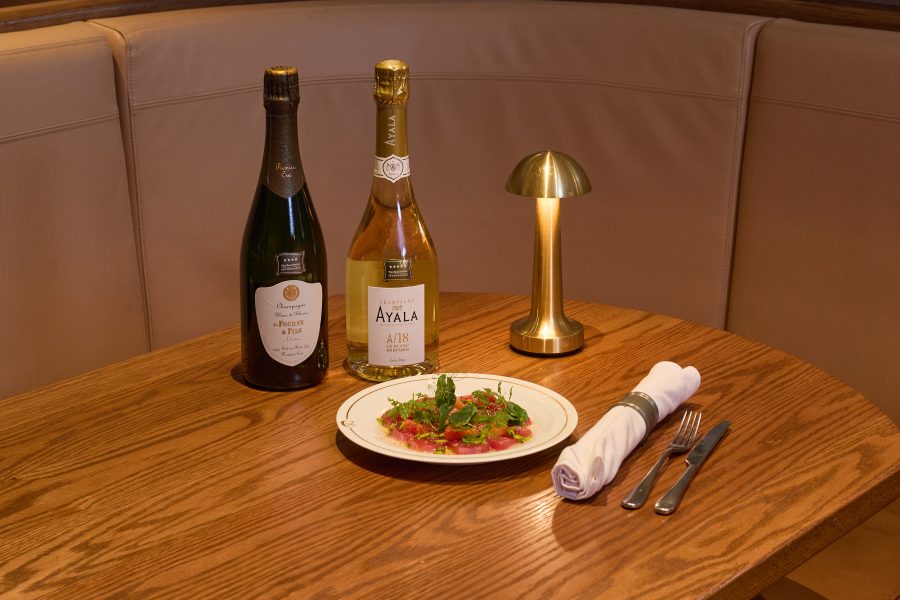
- The first bracket of Champagnes served with the first course of Bluefin tuna . The Real Review
-
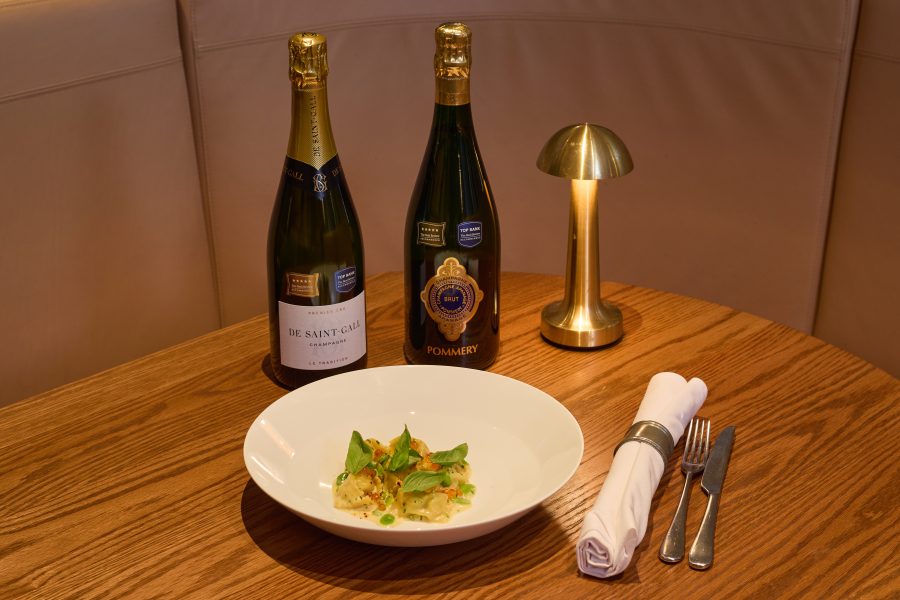
- The second bracket of Champagnes matched with the Scallop agnolotti dish. The Real Review
-
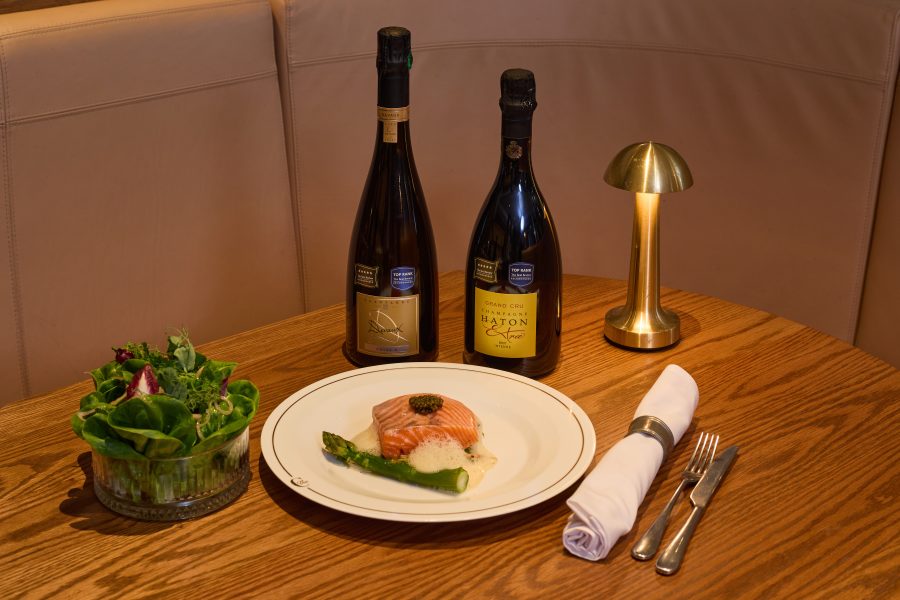
- The wines served with the Ocean trout dish. The Real Review
-
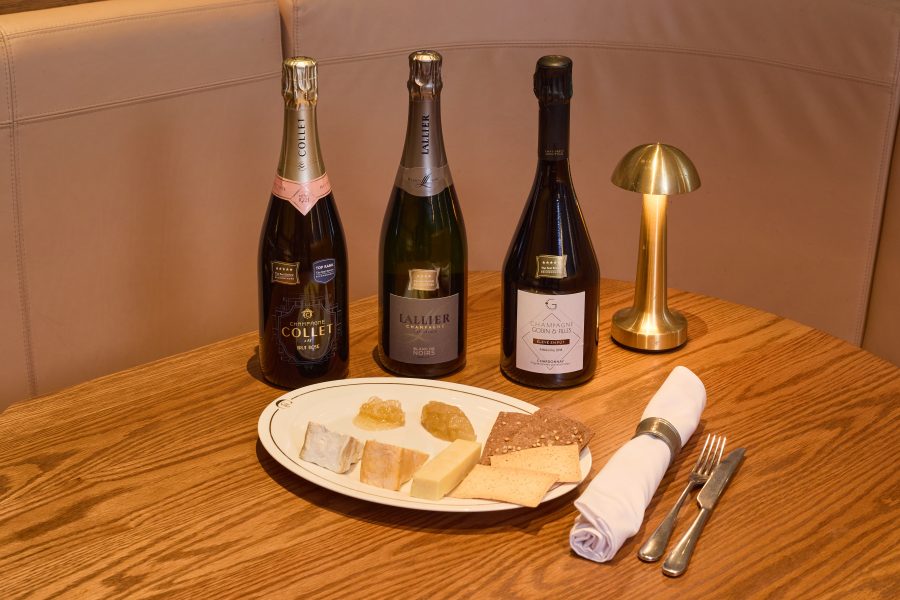
- The Champagnes served with the cheese course. The Real Review
Third course
Ocean trout with zucchini, n25 caviar and lobster cream
Wines
When I tasted this dish at the pre-dinner photo shoot it was stunningly good, but at dinner, my serving was over-salted. However, others didn’t have a problem with it.
The wines were both outstanding: the Devaux was a 60/40 pinot noir/chardonnay from pinot country, in the Aube region. As the name suggests it spent five years on lees, and 10% of it was fermented in oak, with 40% reserve wines giving the blend extra depth and complexity. A superb honey/nougat and pastry scented wine.
Haton is a small-ish, family owned business with 40 ha of vines. The wine is all grand cru from some of the most prized sites in the Montagne de Reims and Côte des Blancs, partly oak-fermented and given a minimum 6 years on lees. A really complex, nutty wine with lots of layers and serious concentration.
Fourth course
Australian and European cheeses
Wines
Three contrasting styles to complete the evening: a rosé, a blanc de noirs (made entirely from pinot noir), and a blanc de blancs (entirely chardonnay, but barrel fermented, from a single-vintage and long-aged).
The cheeses—a creamy white-mould, a Comté and a cheddar—all went well with the wines, presenting many different combinations of flavours, all successful in my view.
The Collet Rosé, a blend of grand and premier crus with 20% reserve wines, was much admired in the room for its red-winey ‘pinosity’—a rich wine with vibrancy.
The cheeses all went well with the wines, presenting many different combinations of flavours, all successful in my view.The Lallier, made by the highly experienced Dominique Demarville, is mostly from two famous pinot noir grand crus: Aÿ and Verzenay. 30% reserve wines and 10% made in oak, it’s a complex and sophisticated wine that can handle hearty dishes, such as white meats. Some blancs de noirs can be heavy but this wine is aerial!
The Godin wines are new to Australia, but also new as a brand, launched by three sisters in 2020. Five generations had sold their grapes to the local co-op but the Godin sisters took the next step. We were fortunate that the importer (Vino Cammino) secured half the tiny production of this wine for Australia. It’s 100% chardonnay from a chalky part of the Montagne de Reims (Mont de Berru), fermented and aged in oak for six months, given six years on lees and dosed at just 5 grams per litre. A superb wine and a real ‘spoil’ for the diners: rich buttery, roast hazelnut, toasty flavours of great detail. A fitting climax to a great evening.