


Book review: Wine & War by Don and Petie Kladstrup
 Huon Hooke in Wine Books
 Become a member to view this article
The Real Review is editorially independent. We don’t sell wine. We are free of influence from vested interests such as wine producers and sellers, and proprietors with conflicts. We tell you what we think about reviewed wines, served straight up. Our articles cover topics our writers choose because of genuine interest.
We rely on our members to publish The Real Review. Membership provides access to thousands of articles, a growing database of more than 160,000 wine tasting notes, exclusive member discounts and more.
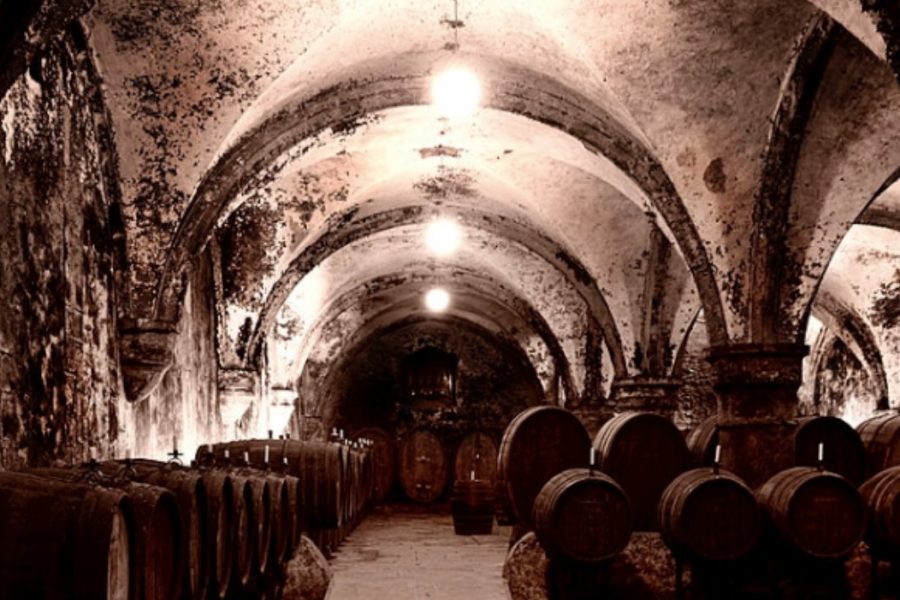
An underground cellar in Burgundy during the war. donandpetiekladstrup.com
This is an oldie but a goodie. Indeed, Wine & War could be called a classic. It was published 23 years ago and is often cited as one of the most compelling and readable wine books ever written.
The book traces of the Second World War from the points of view of several French wine producers, from Bordeaux, Burgundy, Champagne, Alsace and the Loire Valley. In particular, it highlights the devastating effect of the German occupation of France from 1940 to 45 and, through that lens, the entire French nation. Even if you aren’t that interested in the wine side of the story, it’s a novel and worthwhile way to approach the story of the French nation at war with Germany.
A theme that emerges repeatedly is the moral and spiritual value of the wine industry to France at this time.I had never appreciated, for example, how draconian the French Vichy government was against its own people, how members of the Resistance were treated by some of their own countrymen or how ‘collaborators’ were hauled before a tribunal (and even executed) after the war. It’s also interesting how sympathetic some German wine traders were to the French vignerons: several were close friends with the French who supplied them before, during and after the war. Some were even related.
In Alsace, people who considered themselves French suddenly had to ‘flick a switch’ and become German—even join the German army and fight their own countrymen. In the venerable Hugel family, two brothers found themselves fighting against each other, on opposite sides.
We read the stories of heroes like Bernard de Nonancourt, of Champagne Laurent-Perrier, and Gaston Huet of Domaine Huet in Vouvray. We also read the story of how the city of Paris and the Quai des Chartrons in Bordeaux were spared from what might have been complete destruction as the Germans retreated in 1945 after losing the war. The German commander who had the power to raze Paris disobeyed his orders—a potentially capital offence—for which the world must be forever grateful.
We also hear about the Jewish wine producers such as the Rothschilds of Bordeaux. And May-Eliane Miaihle de Lencquesaing (of Château Pichon-Lalande) and her family’s tribulations both during the occupation, and then afterwards, cleaning up the mess the Nazis left behind. There’s the tragic story of high-profile Bordeaux negociant Louis Eschenauer, who was jailed after the war for ‘economic collaboration’ with the Germans.
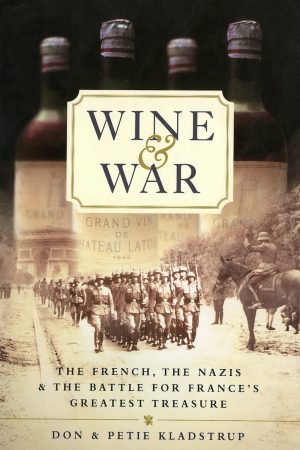
Wine & War book. donandpetiekladstrup.com
Perhaps the best-known stories of this time are those of the many vignerons and proprietors who hid the treasured bottles of their great vintages from the German occupiers—who were looting the cellars of France’s greatest estates. As with the Drouhins of Burgundy, wine was often hidden in underground tunnels where brick walls were hurriedly built to hide the bottles even as the Germans were marching into Beaune.
A theme that emerges repeatedly is the moral and spiritual value of the wine industry to France at this time. A large number of French were involved in the wine industry at some level; wine was economically vital to the nation; wine was symbolic of Frenchness at this time of extreme hardship; and because most young men were involved in the war, there was a massive shortage of labour to work the vineyards.
The cliché is that the beginning of war is marked by a terrible vintage, and the end of war is marked by a great vintage. And so it was with 1939 and 1945.
It’s a fascinating story, beautifully told.
Wine & War: The Battle for France’s Greatest Treasure, by Don and Petie Kladstrup, published in 2001 by Hodder & Stoughton