


Book review: The Winemasters of Bordeaux by Nicholas Faith
 Huon Hooke in Wine Books
 Become a member to view this article
The Real Review is editorially independent. We don’t sell wine. We are free of influence from vested interests such as wine producers and sellers, and proprietors with conflicts. We tell you what we think about reviewed wines, served straight up. Our articles cover topics our writers choose because of genuine interest.
We rely on our members to publish The Real Review. Membership provides access to thousands of articles, a growing database of more than 160,000 wine tasting notes, exclusive member discounts and more.
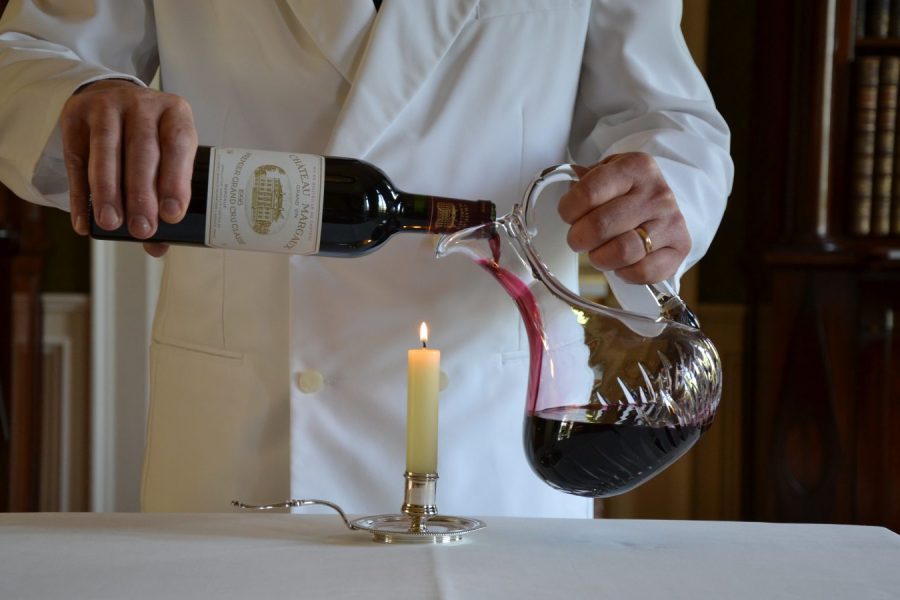
As late as the mid 1970s Château Margaux was sold for a minimal price. Château Margaux
Anybody at all interested in Bordeaux and its wines would find it well worthwhile reading this classic, written by English writer Nick Faith, first published in 1978 with a revised edition in 1999.
If you think the current woes of Bordeaux are anything new, the history teaches us that Bordeaux has had dramatic ups and downs throughout its long and turbulent history and indeed, the recent period of tremendous prosperity and huge prices for the top classified wines is a relatively recent phenomenon. For most of its history pre the 1970s, Bordeaux seems to have spent substantially more time in the red than in the black.
Perhaps the most shocking thing for those new to Bordeaux wine is that as recently as the 1970s Bordeaux wines were widely adulterated (and mostly improved) with wine from other regions.As a financial journo, Faith may seem disproportionately interested in the financial side of the Bordeaux trade: the size of the harvests, the shenanigans of the traders, and the buying and selling of properties and the trading prices of the wines. But Bordeaux is (and has always been) such a commodity, we can readily understand a financial journo being fascinated by it.
Through the prism of the trade, we get a very good picture of the many aspects of Bordeaux. From the 17th century, when wine was pretty much only drunk by the royal, the noble and wealthy, to the late 1990s, it’s a wild ride. Newcomers to ‘claret’ will be fascinated by the frequency with which famous châteaux were sold by owners who were strapped for cash. As late as the mid 1970s Château Margaux was sold for a minimal price— ‘one of the greatest bargains in the history of the Gironde’—as the shipper Ginestet was forced to flog it off. Fortunately it was snapped up by the Mentzelopoulous family, who ushered in massive improvements.
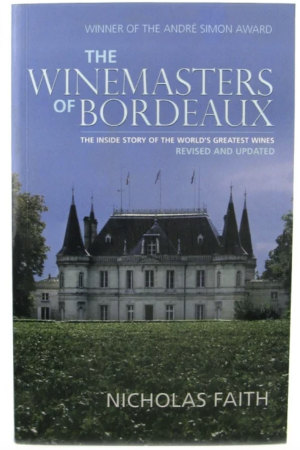
The Winemasters of Bordeaux. Amazon UK
One of the most extraordinary tales in the book involves the scandal that engulfed the family firm of Cruse in 1974 which resulted in the company being put on very public trial and one of its members committing suicide. Another is the many crafty manoeuvrings of Baron Philippe de Rothschild, including those that culminated in his Château Mouton-Rothschild being elevated to first growth ranking. Through it all, the tension between the growers and the traders, especially the so-called Chartronnais (the merchants who operated from the Quai des Chartrons in Bordeaux city), is a continuous theme. As is the crucial influence since the earliest times of various foreigners, especially the Dutch, Germans, British and Irish.
Perhaps the most shocking thing for those new to Bordeaux wine is that as recently as the 1970s Bordeaux wines were widely adulterated (and mostly improved) with wine from other regions.
It’s a great read and highly recommended. Copies can be found online and in some second-hand bookshops.