


Spreading the Love (Horahia te Aroha)
 Stephen Wong MW in Wine Spotlights
 Become a member to view this article
The Real Review is editorially independent. We don’t sell wine. We are free of influence from vested interests such as wine producers and sellers, and proprietors with conflicts. We tell you what we think about reviewed wines, served straight up. Our articles cover topics our writers choose because of genuine interest.
We rely on our members to publish The Real Review. Membership provides access to thousands of articles, a growing database of more than 160,000 wine tasting notes, exclusive member discounts and more.
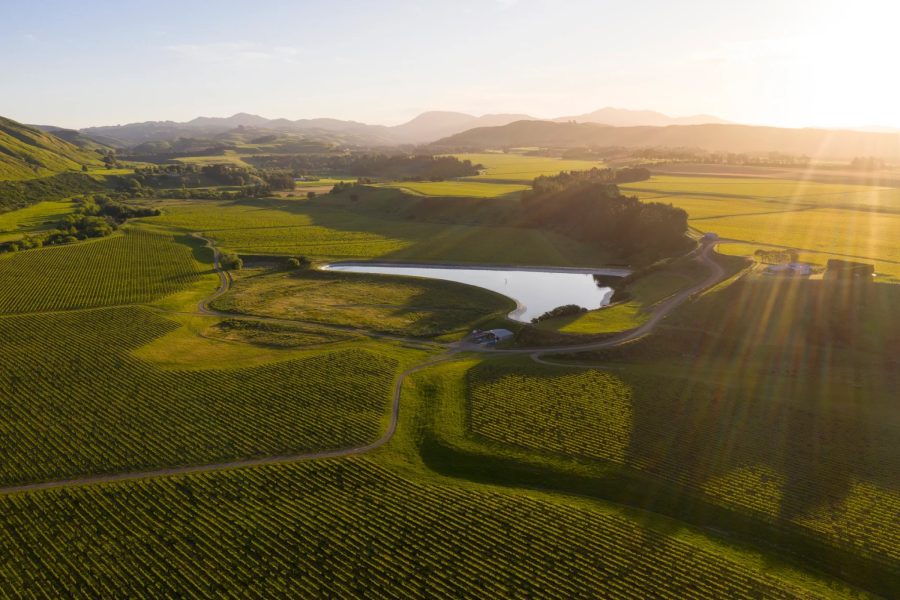
The Craggy Range Te Muna Road Vineyard in Martinborough. Craggy Range Wines
Jane Skilton MW and I were recently fortunate to be given a rare opportunity to taste, study and discuss every released vintage of Craggy Range’s iconic Aroha Pinot Noir, as well as a sneak preview of the unreleased 2024. The tasting took place at Craggy Range’s Te Muna Vineyard on September 26.
Chief winemaker Ben Tombs had generously organised the tasting and brought the wines down with him to Martinborough from Hawke’s Bay the evening prior, when we also had an opportunity to see the 2012 Aroha with dinner. That was the vintage which kicked off the idea of this vertical tasting. Jane, while judging in China, had taken a bottle of 2012 with her and it generated interesting threads of conversation.
From my perspective, I saw distinct patterns which mapped with reasonable accuracy to both vintage conditions and winemaker input.We tasted the wines from oldest to youngest, starting with the 2006 and finishing with Ben’s unreleased 2024. There was one year missing from the lineup (2010) which was not made, and unfortunately, one of the bottles under cork (2011) was affected by TCA (cork taint) enough to mute the wine’s expression, making it difficult to assess.
To help with the process of understanding these wines, Ben had very kindly brought along deep technical details about the weather, growing degree days, precipitation, and deeper notes about the temperatures and seasonal patterns for each vintage. From a winemaking perspective, he had the vineyard block breakdowns and clonal composition along with all the other relevant enological details such as whole bunch use, new oak and length of élevage.
From my perspective, I saw distinct patterns which mapped with reasonable accuracy to both vintage conditions and winemaker input—keeping in mind that Aroha had five hands-on winemakers across the 18 wines we tasted. Adrian Baker made 2006-2008; Rod Easthope 2009-2011; Matt Stafford 2012-2018; Julian Grounds 2019-2023 and Ben Tombs from 2024 onwards. It is also worth remembering that Steve Smith MW was in charge of Craggy Range from its inception until the 2015 vintage, so he would have been an influence on all of those vintages.
The Te Muna Road Vineyard itself has been Craggy Range’s Martinborough home since plantings began in 1999, eventually growing into a 250 ha mosaic before the company added another vineyard further along Te Muna Road when they purchased the 132 ha Donald family farm in 2018.
The pinot noir on Te Muna Road Vineyard is planted on the upper terrace and specifically for Aroha, the focus narrows to Blocks 9, 10, 16, and 19, all planted in 2000. Block 19 is planted with Abel, and the rest are a mix of Dijon clones (114, 115, 667). The pinot noir blocks have seen organic viticulture trials and with this current season (ie. for the 2026 vintage) it will be managed organically and commence certification. The tasting revealed how decisively these clonal sources shape the wine’s personality.
For me, the fruit from Dijon-dominant blocks leads Te Aroha towards what I see as its signature perfumed, crystalline quality: red cherry, rose petal, and a transparency. The Abel-influenced vintages, on the other hand, add notable architecture: chalky tannins, savoury depth, and perhaps the grip necessary for extended aging. When harmoniously blended, as in the benchmark 2019, the result is both immediate and enduring.
Throughout my analysis of the wines, I found the following arcs and trends. The wine began as an oak-forward, extracted pinot (2006-2008) with aggressive extraction; often 6 punch-downs a day with shorter elevage and more noticeable oak flavours despite the actual percentage of new oak not changing much across the vertical (2018 being the exception). The style noticeably shifted towards a more spicy and brooding structure with the 2009 – coincidentally the first vintage with influence from Abel which debuts at a whopping 74% of the blend and also the highest alcohol of the vertical at 14.6%.
The next noticeable influence was the rapid rise in whole-bunch use from 5% in the 2008 progressively up to 50% in 2014, often bringing aromatic finesse. Whole-bunch inclusion leapt up to 63% with Julian Grounds’ first vintage, which was also the last vintage in the Abel-influenced run, uninterrupted since 2013.
The 2019-2021 years were El Niño vintages whereas 2022 and 2023 are famously La Niña and quite challenging. Julian’s era also saw further reduction in mechanical extraction, opting for gentler pump-overs in lieu of frequent punch-downs. This helped preserve the delicate expressions from the rainy years of 2022 and 2023, giving them structural elegance and grace to accompany the more precocious fruit.
From the very early sneak preview of the ’24 Aroha under Ben Tombs’ guidance, I noted a move towards even more restrained winemaking and terroir-forward clarity. He has reintroduced a practice which was present in the earliest wines (no fining and no filtration) as well as inclusion of some amphora trials.
It cannot be ignored that closures played a significant part in the performance of these wines. The 2006 and 2007 which we tasted were from their early screwcap trials and showed very well for their age. I have strong suspicions that bottles under cork will be more developed so those should be opened and enjoyed right away. 2008 through to 2017 were all under cork and one, the 2011, was affected by cork taint.
My quick, brief collector’s guide to Aroha:
Top wines to cellar: 2019, 2020, 2014, 2016. These were my stand-outs and Ben pointed out that I had a clear preference for El Niño and warmer vintages for the site, so do keep that in mind when taking my recommendations. If you generally have a preference for cooler years in Martinborough, then don’t follow my advice!
Mid-term propositions: 2013, 2018 and 2009. These show structure, perfume and either Abel backbone or Dijon purity combined with whole-bunch architecture.
Drink in the near term: 2006, 2007, 2008, 2012. These are either at peak or have limited further upside from extended cellaring.
Watch & decide: 2011, 2015, 2021–2023; these are good quality but variable styles, mainly due to vintage conditions. 2022 and 2023 may reward short to medium patience, depending on your palate.
From the very early sneak preview of the ’24 Aroha under Ben Tombs’ guidance, I noted a move towards even more restrained winemaking and terroir-forward clarity.Aroha’s recurring motifs of red and black fruit, game, porcini, salinity, floral lift and Abel-led spice make it a good match with roasted duck or game birds, confit leg of lamb (herb-crusted or not), charred mushrooms and umami-rich dishes. The firmer vintages (2009, 2015, 2018) can even go with gamy venison and blue-veined or mature hard cheeses. For the perfumed vintages (2019, 2014, 2024) try more delicately spiced dishes and mushroom-influenced sauces.
To recap, Aroha’s identity appears to be a tango between two competing forces: firstly, a perfume-led Dijon clarity that presents crystalline red fruit and floral lift, and secondly, the complementary Abel clone and/or whole-bunch-driven structure that yields chalky, long-lived tannins and tertiary complexity. The 2019 stands as the clearest articulation of that synthesis.
Ben Tombs’ early stewardship with the 2024 preview hints at a future where clarity and minimal intervention define Aroha as much as power and polish once did. It will be an exciting future to watch.