


Barolo and Barbaresco new vintage releases at Grandi Langhe 2025
 Steve Blandford in Free for all
 Become a member to view this article
The Real Review is editorially independent. We don’t sell wine. We are free of influence from vested interests such as wine producers and sellers, and proprietors with conflicts. We tell you what we think about reviewed wines, served straight up. Our articles cover topics our writers choose because of genuine interest.
We rely on our members to publish The Real Review. Membership provides access to thousands of articles, a growing database of more than 160,000 wine tasting notes, exclusive member discounts and more.
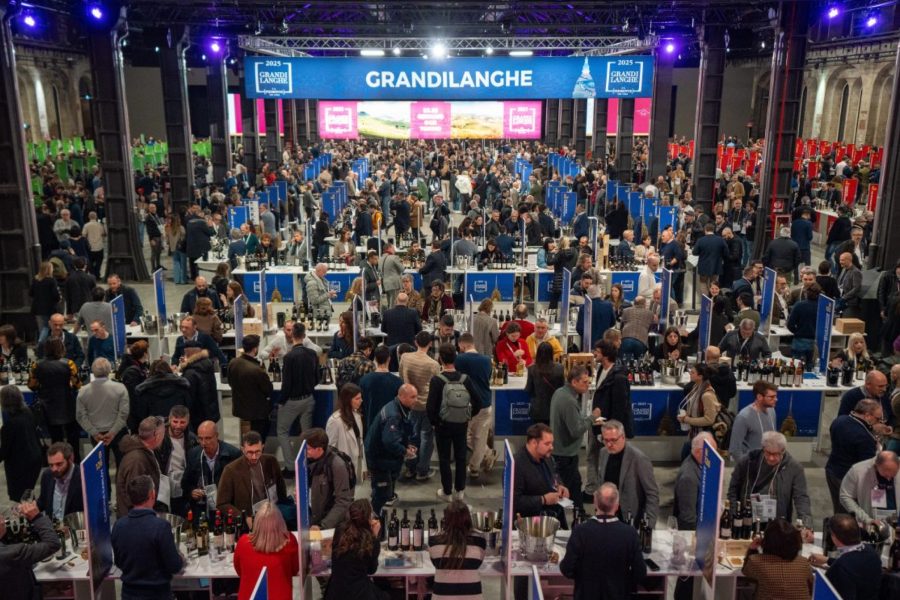
A packed room at Grandi Langhe 2025. Grandi Langhe
Vino Italiano Feature Week
Change is good, they say.
With this thought in mind, my Barolo and Barbaresco new releases report for this year is not drawn from the broader range, scattergun tasting afforded by Nebbiolo Prima but from a selection of tasting opportunities attended during the first few months of this year. As a result, my appraisals this year became more producer targeted while also giving me, very much in the case of the Barolo wines, a greater sense of the village or commune characteristics and, in particular, how individual vineyards performed.
Grandi Langhe is the largest wine exhibition in the Piemonte region and one of the largest in Italy.Amongst those tastings was the opportunity to attend the Grandi Langhe wine event held in Turin over two days in late January. This is the largest wine exhibition in the Piemonte region and one of the largest in Italy. The name is a little misleading because the show features a huge number of exhibitors from all the appellations in Piemonte. And for the first time this year, the organisers included a dedicated area for the press. Here, in relative calm, it was possible to sample a wide selection of the 2022 Barbaresco and 2021 Barolo wines (plus some Riserva wines) and, with a bit of pre-planning and clever use of the codes allocated to each bottle, taste each wine blind.
So, what to make of these two vintages and the wines produced? Let’s look at the 2022 vintage first.
The growing season of 2022 was undoubtedly an extraordinary one, though the following 2023 season and the ongoing changes in the local climate suggest that it will not be unique in its characteristics. It was the second year in an almost three-year drought period. Published data shows that it was the second-driest season this century (after 2003) and, based on heat summation data, easily the hottest season on record.
Living here, I recall the unseasonal warmth of May and then the unrelenting heat from June to mid-September, when things eased a little, although October was also unseasonably warm, a problem for those ultra-traditional producers who don’t use temperature control in their cellars. Rainfall was minimal, sporadic and localised. One day of good rain at the very end of September would, in a normal season, have been perfectly timed. But because it was an early harvest, this day of rain was in the midst of the fruit picking and more a hindrance than a help.
I was very pleasantly surprised. Here were wines that, in the main, had juicy and vibrant fruit, good acidity and plenty of immediate charm.A tough vintage for the vines. Armed with this knowledge I launched into the tastings of the 2022 Barbaresco wines with some trepidation. But I was very pleasantly surprised. Here were wines that, in the main, had juicy and vibrant fruit, good acidity and plenty of immediate charm. In the main, they will not be long-term keepers but you can happily drink these wines while waiting for the 2019 and 2021 wines to hit their peak. They will also be wines suited to restaurant lists where immediate drinkability is required.
Talking to some of the producers post degustazione, most said that they were also pleasantly surprised by how the wines worked out. While younger vines struggled, and in some cases withered, established vineyards seemed to take the seasonal conditions in their stride, a testament to the adaptability of the nebbiolo grapevine.
Barbaresco highlights include wines from Albino Rocca (Ronchi and Montersino cru wines), Ca’ del Baio, a producer that has in the past been too generous with their oak usage but in 2022 has struck the right balance, and a couple of wines from Barolo interlopers, the Massolino Barbaresco Albesani and the Oddero Barbaresco Gallina. Plus, two thoroughly charming wines from a new producer of which I know nothing—Bricco Ciarla. This winery warrants further investigation.
My top 14 Barbaresco 2022 wines, scoring 94 points or more, can be found here.
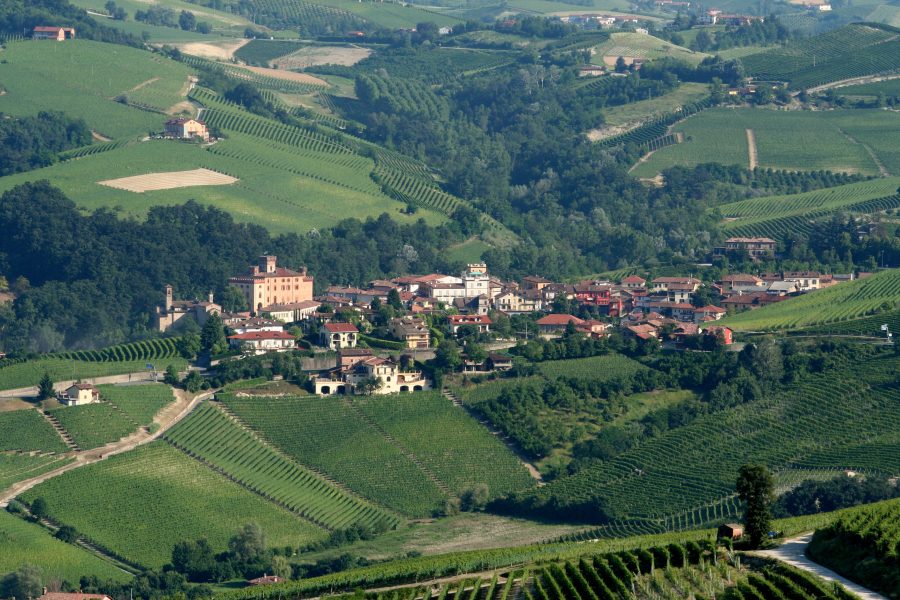
Aerial view of Barolo town and vineyards. Wikimedia Commons

And now the Barolo wines, from a vintage that has had considerable hype. I included a 2021 season summary in last year’s report, but it bears re-reading here. 2021 was the start of the drought years and was an undoubtedly dry growing season. But the abundant snows of the winter preceding were a huge boon, ensuring there was an ample water supply in the soils. And while it was a warm year, it was nowhere near as hot as the subsequent two years. It was almost a perfect growing season.
These are among the best new release wines I have ever tasted from the Barolo appellation.As an aside, snow not only adds to the water reserves in a regulated manner, it helps cleanse the soil and, according to local growers, is important in vine health. Subsequent winters have seen small, intermittent falls of snow, lasting a day or two on the ground. The 2024 growing season was very wet but it also remained relatively warm, including through this latest winter and, for the first time in living memory according to the locals, there has been absolutely no snow. Is this a portent of future vintages?
Back to the wines. Do they live up to the hype and the promise of the 2021 season?
For me, undoubtedly yes! Indeed, these are among the best new release wines I have ever tasted from the Barolo appellation. The defining feature of many is the purity and depth of fruit expressed, and the wonderful floral scents accompanying, while also possessing the structure and balance for long-term cellaring. If the equally lauded 2019 vintage was known for the superb ripeness of tannins in the wines, those tannins, such an important component of great Barolo and Barbaresco, may be even more compelling in 2021.
Of 131 Barolo 2021 wines tasted up to the time of writing, I have scored 37 at 96 points or more, including 7 wines at 98 points, a great indication of the quality of the vintage. That list of wines (96 points or more) includes many of the best producers in the region at the top of their game—Burlotto, Vietti, Oddero, Brovia, Azelia, Paolo Scavino, Elvio Cogno—as well as outstanding producers such as Vajra, Ettore Germano, Giacomo Fenocchio and Poderi Luigi Einaudi, whose names have consistently appeared in my reports over the years. But there are other producers in that list with whom you, dear readers, may be less familiar—Giovanni Rosso, Cordero di Montezemolo, Carlo Revello, Mauro Molino, Cascina Sòt, Bovio and Livia Fontana. All worth seeking out.
Excellent wines have come from all of the main villages in the appellation and if, in the past, I have been critical of wines from certain communes, there are no such qualms this year. The vintage has highlighted the characters of each commune, with an emphasis on the fruit purity, fragrance and finesse. Except, interestingly, for the wines from Monforte d’Alba where, based on my tastings, the commune’s trademark power and savoury intensity has been amplified.
More than this, however, it is a vintage where there is brilliantly clear definition between single vineyard sites, their traits shining through. Many of the most famous cru vineyards (or MGAs as they are titled here) have yielded superb wines—Cerretta and Lazzarito of Serralunga d’Alba, Monvigliero of Verduno, Rocche di Castiglione of Castiglione Falletto, Brunate of La Morra, Cannubi of the Barolo comune, and Bussia of Monforte d’Alba, all vineyard names represented more than once in that list of top wines. However, for me, the vineyard whose star shines brightest is Villero within the commune of Castiglione Falletto, a number of producers making wines of exceptional fruit depth, complexity and elegance.
The immediate appeal and charm of the 2022 Barbaresco wines will make for pleasurable drinking over the next few years.Last but by no means least, I have sampled a good selection of 2019 Riserva wines. With the emergence and growing importance of single vineyard MGA wines in Barolo, I had found myself wondering if the riserva label was becoming redundant. This selection of 2019 wines quickly dispelled those concerns with a number of beautiful wines presented. Indeed, one of those wines, the Oddero Poderi e Cantine Barolo Riserva DOCG Vignarionda 2019, flirted dangerously with perfection, getting as close to 99 points as I am likely to award a new release wine. Only the thought that it will continue to improve with time in the cellar stayed my hand.
There is an abundance of riches to be found in this year’s new release wines of Barolo and Barbaresco. The immediate appeal and charm of the 2022 Barbaresco wines will make for pleasurable drinking over the next few years. On the other hand, the exceptional quality of the 2021 Barolo wines in general cannot be overstated. And there is profound beauty in the best examples from the vintage. Time may tell if my appraisal for the vintage is too bullish, but I feel I am on pretty solid ground in my effusive praise. These wines will not be cheap, but for all serious wine lovers, it will be a “must buy” vintage.