


Central Otago: New Zealand’s organic trailblazers
 Stephen Wong MW in Regional Spotlights
 Become a member to view this article
The Real Review is editorially independent. We don’t sell wine. We are free of influence from vested interests such as wine producers and sellers, and proprietors with conflicts. We tell you what we think about reviewed wines, served straight up. Our articles cover topics our writers choose because of genuine interest.
We rely on our members to publish The Real Review. Membership provides access to thousands of articles, a growing database of more than 160,000 wine tasting notes, exclusive member discounts and more.
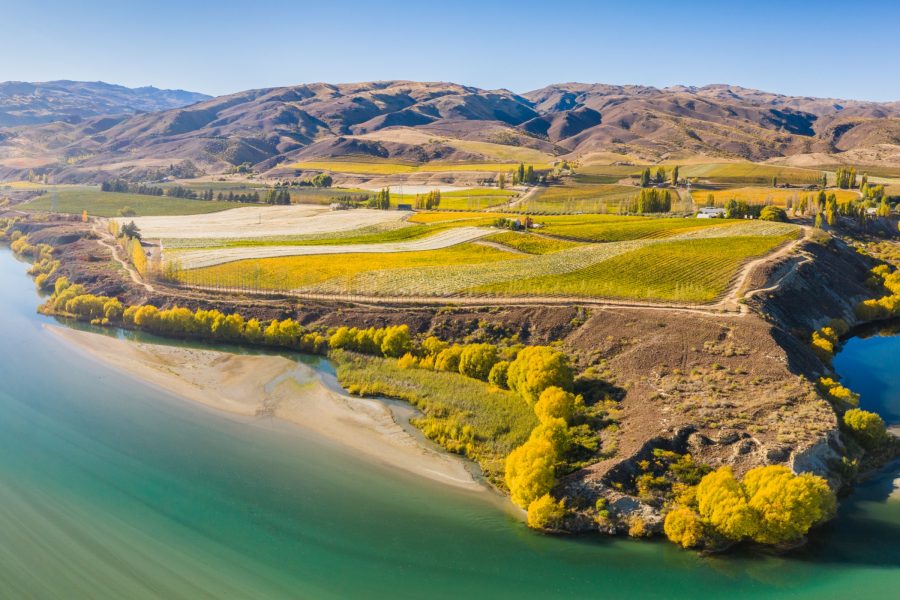
Aerial view of the Carrick vineyards in Central Otago. Central Otago Winegrowers’ Association
The Central Otago region has exceeded 30% organic certified production. This is easily the highest proportion of any region in New Zealand.
This was announced by Carolyn Murray, general manager of Central Otago Winegrowers’ Association (COWA), on February 10.
Reaching 30% organic certification of our vineyard area is a true testament to the passion and dedication of our growers.” – Carolyn Murray (COWA)“Central Otago has earned its international reputation for consistently delivering beyond what you’d expect from a region of our size,” Carolyn said.
“Reaching 30% organic certification of our vineyard area is a true testament to the passion and dedication of our growers. We’re privileged to work on some of the most extraordinary land in the world, and we hope wine lovers, commentators, and trade professionals will keep this care and commitment in mind with every drop that they enjoy.”
This is no small feat when one considers that many of the region’s vineyards are small: the average vineyard size in Central Otago is less than 9 ha, so it requires quite widespread adoption of organic farming to achieve that number.
In contrast, the 2023 numbers from Organic Winegrowers New Zealand (the latest figures available) place the national organic vineyard at 2,353 ha, or 6% of the total. This number includes the 331 ha of vineyard under conversion at the time. Central Otago contributes 628 ha to that total, or more than 25% of the national organic planted area.
For context, Central Otago vineyards represent about 5% of New Zealand’s total vineyard area. The region with the next highest organic adoption is the Wairarapa, which has 144 ha of organic vineyard, or 13% of the regional total. Marlborough actually has more vineyard area than Central Otago under organic farming, 1095 ha, but that is only about 4% of the region’s total planted area, due to the sheer scale of the region.
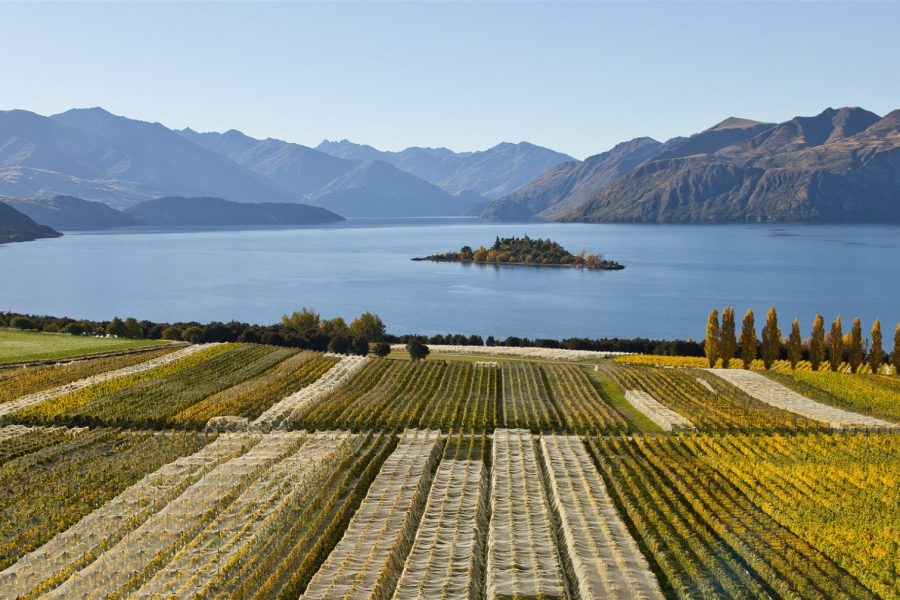
The Rippon vineyards in Wanaka. Central Otago Winegrowers’ Association
Central Otago’s pursuit of organics is not new: it started as early as 2009 when COWA set an internal target to achieve 20% organic vineyard area by 2020. They easily exceeded this target but reaching 23% in that time. Many of the region’s top wineries and vineyards are organic, including— notably—Felton Road, Rippon, Burn Cottage, Quartz Reef, Carrick, Amisfield, La Ferme de Sato, Domain Road, Doctor’s Flat, Calvert Vineyard, Domaine-Thomson, Judge Rock, Lowburn Ferry, Mount Edward, Nanny Goat, O’ Naturel Wines, Peregrine, Rock Ferry, Gibbston Valley and Two Paddocks. There are other organic vineyards in the area as well as wineries currently converting to organics or who farm some of their vineyards organically, such as Te Kano.
COWA has partnered with Lincoln University to better understand the challenges of achieving 50% of planted area under organic certification by 2030. While challenges like conversion costs and financial support remain, the study highlighted Central Otago’s vibrant peer network, openness to innovation and can-do attitude as the region’s strengths. The climate in Central Otago is generally drier than other New Zealand regions, which reduces the risk of humidity-related diseases. Some subregions in Cromwell and Alexandra are even considered semi-arid in a viticultural sense.
COWA has partnered with Lincoln University to better understand the challenges of achieving 50% of planted area under organic certification by 2030.At the Spring Release tasting in November 2024, a small group of winemakers, led by Rippon’s Nick Mills, floated the idea of a shift in storytelling focus away from winemaking and accolades towards land stewardship and farming. Rosie Menzies, winemaker at Carrick, has since added that:
“Every sip of wine tells the story of the land it comes from. Every purchase—whether it’s a glass, bottle, or case—directly impacts a vineyard somewhere … We’d love to see consumers and wine professionals embrace land stewardship in their choices and reviews. It’s a fresh perspective on wine that could truly make a difference, reshaping how people value the connection between wine and the land.”
They threw down the gauntlet to our small group of writers and reviewers to highlight farming practices in our reviews and tasting notes.
Although that would not be possible for The Real Review due to the nature of our tastings (which are blind after all, so it wouldn’t be possible to talk about farming practices without knowing the identities of the wines we are tasting), it does remind us that in broader communication about wine—or perhaps in Cellar Talk articles—we can certainly highlight how these producers are looking after the land (or not).