


Exploring New Zealand’s best known syrah regions
 Stephen Wong MW in Regional Spotlights
 Become a member to view this article
The Real Review is editorially independent. We don’t sell wine. We are free of influence from vested interests such as wine producers and sellers, and proprietors with conflicts. We tell you what we think about reviewed wines, served straight up. Our articles cover topics our writers choose because of genuine interest.
We rely on our members to publish The Real Review. Membership provides access to thousands of articles, a growing database of more than 160,000 wine tasting notes, exclusive member discounts and more.
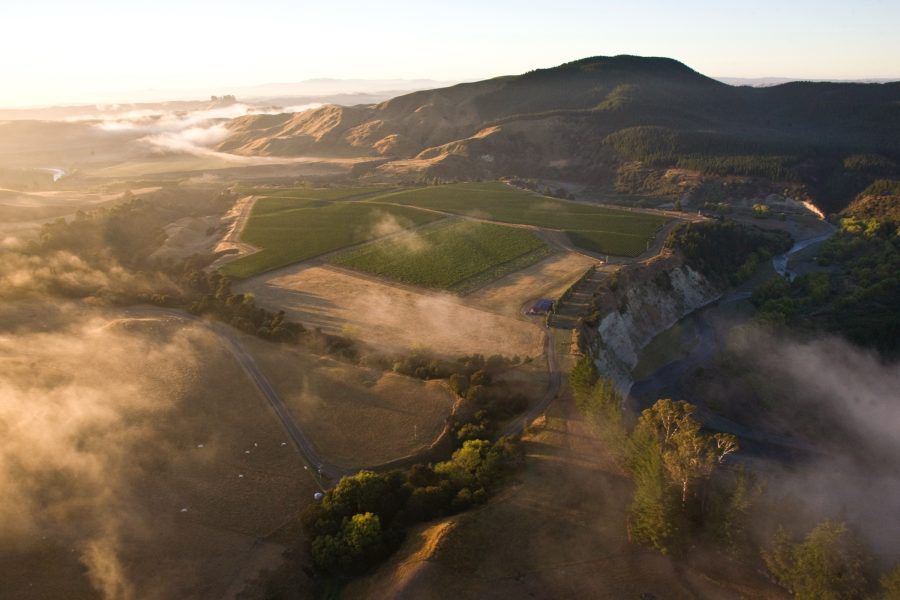
The Hawke’s Bay wines have clear distinctions discernible between the subregions. Wine NZ (Sacred Hill)
Guide to Shiraz/Syrah Feature Week
Syrah is holding steady at seventh place variety by planted area in Aotearoa New Zealand, or the third if just looking at red grape varieties (behind pinot noir and merlot).
In 2024, it amounted to 418 ha of vineyard, which is less than 1% of the national vineyard. This is a slight decrease from a peak of 440 ha in 2019, and is predicted to rise a tiny amount to 420 ha in 2026. Of the 418 ha, the overwhelming majority, 316.43 ha, is found in Hawke’s Bay with Auckland (mainly Waiheke) coming in a distant second with 48.92 ha. Northland’s 13.5 ha, Marlborough’s 12.5 ha, the Wairarapa’s 10.57 ha and North Canterbury’s 8.3 ha are the only other regions with more than 5 ha planted each, though almost every registered wine region in the country has at least some syrah vines. Waitaki is the notable exception.
Though there is syrah planted in almost every region, it would be a stretch to ascribe regional character to each one.Though there is syrah planted in almost every region, it would be a stretch to ascribe regional character to each one. The main regions which have developed stylistic regional markers are the top five: Hawke’s Bay, Auckland, Northland, Marlborough and Wairarapa. Northland is the warmest and produces the softest, ripest and fullest wines which express a darker fruit character, less overt spice and also softer acidity. Auckland is not a homogenous vignoble, with quite different wines being made on Waiheke Island than in Matakana.
The main centre for syrah is Waiheke, where several producers of Bordeaux blends also grow syrah. Here, there is a tendency towards quite extracted and oaky wines made in the same style as their blended reds. They often lean towards black fruit, black olive, earth and cocoa with chunky tannins (often bolstered by heavy oak) and there is a legacy of leather or gaminess in many of the wines.
The Hawke’s Bay wines are not uniform either, with clear distinctions discernible between the subregions. The coastal subregions of Te Awanga and Esk Valley have the sleekest tannins, restrained structure and tend to be more perfumed. Vineyards around the Havelock Hills and Tukituki Valley are not generally devoted to syrah but what is there is also generally more elegant than the warmer subregions. Speaking of which, Gimblett Gravels and Bridge Pa Triangle are largely regarded as the heartland of premium syrah in Hawke’s Bay, which is fitting as Alan Limmer rescued the variety from Te Kauwhata and planted it at Stonecroft in the gravels.
These riverbed and redmetal vineyards form the backbone of the region’s syrah reputation with the Gimblett Gravels providing more intense fruit characters, firmer tannins and longevity while the alluvial clays of Bridge Pa Triangle create more volume, perfume and weight with rounder structure and more earthy, savoury flavour rather than the fruit of the gravels.
Further inland towards the Mangatahi and Crownthorpe Terraces, the influence of the ocean decreases and the soil changes too (some areas even have limestone outcrops and argillite shales). Here, the balance of structure shifts from tannin to acidity as peppery and floral aromas of cooler-climate syrah start to dominate.
Comparing wine from the warmer parts of Hawke’s Bay to those from Waiheke Island (which are the two most likely origins of a bottle of New Zealand syrah), Hawke’s Bay tends towards more acid structure, fruit definition and elegance while Waiheke is broader, oakier, more muscular and extracted. Hawke’s Bay is also generally better value than Waiheke Island, not least because it can produce wine across a wider range of price bands.
The main centre for syrah is Waiheke, where several producers of Bordeaux blends also grow syrah.Although not much is planted in the Wairarapa, there are notable wines which have a long-lived reputation, such as Dry River and Ata Rangi in Martinborough or Schubert and Johner in Gladstone. The wines here can vary quite widely in style depending on viticultural choices but in general, they are noticeably cooler-climate in expression than Hawke’s Bay, with more pepper, more violet and fewer olive flavours.
This trend kicks up a notch after crossing the straits into Marlborough. Although not renowned for its Syrah, Marlborough has pockets of very highly regarded vines across both the Wairau Valley and in the Southern Valleys.
There are specific vineyards such as the Fromm vineyard and the Clayvin vineyard which have a reputation for the variety. Here, purple fruit, floral flavours and a more savoury expression can be expected, although in some years that can tip over into dried herb. The interplay of sleek tannins with bright acidity keeps these wines from reaching full-bodied weight but they are very elegant and perfumed with the ability to cellar by virtue of their balance. In contrast the vineyards on the lower terraces along the Wairau River can produce very fruit-driven, almost pinot noir-like renditions of syrah which are enjoyable immediately upon release.