


Introduction to Gippsland
 Huon Hooke in Free for all
 Become a member to view this article
The Real Review is editorially independent. We don’t sell wine. We are free of influence from vested interests such as wine producers and sellers, and proprietors with conflicts. We tell you what we think about reviewed wines, served straight up. Our articles cover topics our writers choose because of genuine interest.
We rely on our members to publish The Real Review. Membership provides access to thousands of articles, a growing database of more than 160,000 wine tasting notes, exclusive member discounts and more.
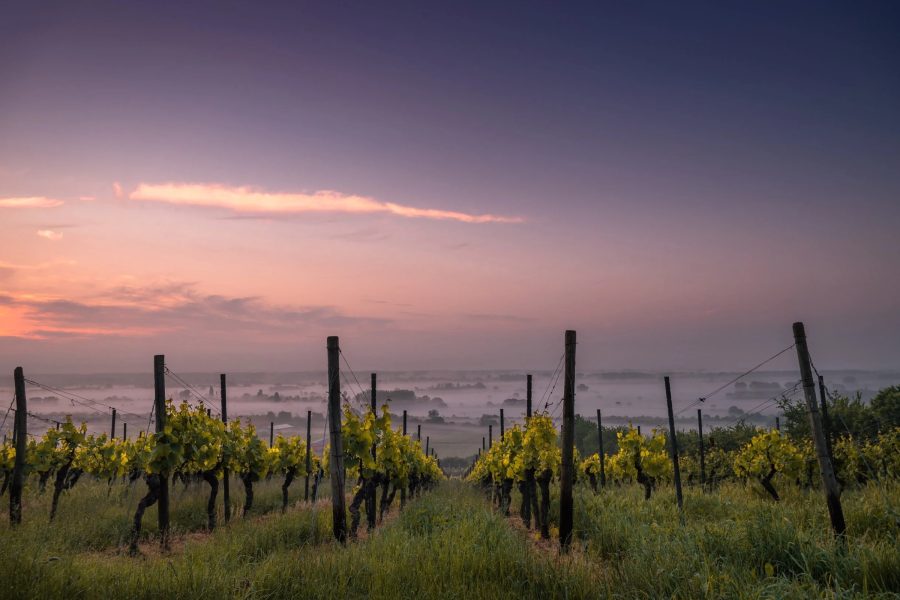
Geographically, Gippsland is a vast area of land. Wine Gippsland
Guide to Gippsland Feature Week
Gippsland may well be Australian wine’s best kept secret. It has no fewer than 33 wineries open for cellar door sales and tastings, according to ‘Eat, Drink, Gippsland’, the region’s tourist handbook. It’s possibly a secret that Melburnians are keeping to themselves, though, as it is just a convenient hour or two’s drive east of the Victorian capital, and is rich in food and wine experiences.
It has no fewer than 33 wineries open for cellar door sales and tastings.The food and drinks businesses there—wineries as well as breweries and distilleries—are all boutique or even micro-boutique sized, so you won’t find their products widely distributed. In-person visiting is essential.
During a recent visit I drove from Warragul south to Leongatha and was struck by the beauty of the rolling, folding, verdant hills, with many high vantage points offering panoramic views of the surrounding country. Pockets of forest added to the feeling of serenity and lushness. The cool damp climate is good for truffles as well as grapes, and I visited my cousin David’s truffle farm near Neerim South, from which he produces Baw Baw Truffles. Terence Ling, partner in The Real Review and a noted cook and gastronome, pronounced Baw Baw Truffles the best he had ever tasted in Australia.
In addition to the 33 mentioned above, here are several more wine producers which aren’t included in the tourist booklet, because they don’t have cellar doors. These include some of the most notable names, such as Bass Phillip, Patrick Sullivan, William Downie, Entropy and Xavier.
Geographically, Gippsland is a vast area of land that extends from just east of the outer Melbourne environs right to the sharp point that is the easternmost extremity of Victoria, near Mallacoota and the NSW border. But, for wine purposes, it extends from outer Melbourne to Lakes Entrance and can be carved into five subregions: South, Central, East and West Gippsland, and Phillip Island.
South Gippsland: This is where most of the vinous activity is located. South Gippsland centres on Leongatha, but extends east to Fish Creek, west to Bass River and south to the coast at Inverloch. Wineries include Bass Phillip, Bellvale, Dirty Three, Fleet, and Gippsland Wine Co.
Central Gippsland: embraces Traralgon, Maffra and Briagolong; wineries include Narkoojee and Glenmaggie.
East Gippsland: the main centres are Bairnsdale and Lakes Entrance; wineries include Nicholson River Winery and Lightfoot Wines.
West Gippsland: extends from Pakenham in outer Melbourne to Warragul. Few wineries, including Cannibal Creek.
Phillip Island—self-explanatory, and home to only two wineries, Purple Hen and Phillip Island Winery.
Gippsland is cool-climate viticulture, but it’s cool climate with a difference. It’s one of the few places in Australia that has year-round rainfall. This means that vines can be grown without irrigation and that the grapes ripen in a relatively humid environment, which has implications for the flavours and chemical balance of the grapes. They retain their acidity and their aromatic components better than in dry climates.
Not surprisingly, the region specialises in cool-climate grape varieties, mainly chardonnay, pinot noir, riesling, sauvignon blanc, gewürztraminer, including sparkling wines, although shiraz, merlot and the cabernets can be ripened in some places.
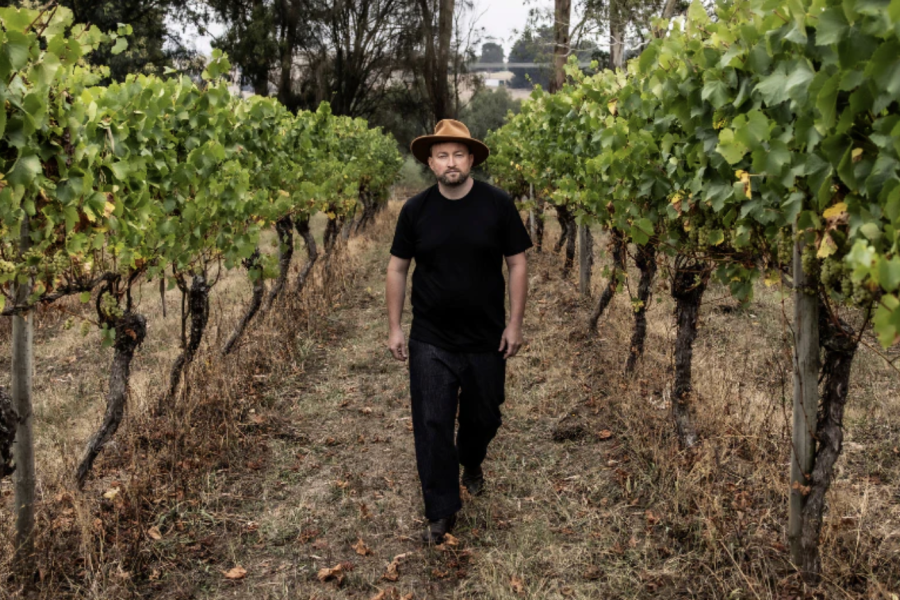
Patrick Sullivan in the vineyard. Patrick Sullivan Wines
Bass Phillip is clearly Gippsland’s most recognised winery: its Reserve Pinot Noir has been described as the best pinot noir in Australia, while its Premium and Estate bottlings of pinot noir can also be stellar. The wines have become more consistently excellent since the change of ownership, and the chardonnay I feel has leapt into a higher gear, both the Premium and Estate versions.
In 2020, a syndicate based in Singapore purchased Bass Phillip from founder Phillip Jones, with renowned Burgundy winemaker Jean-Marie Fourrier in charge of winemaking and viticulture. Fourrier is a minor shareholder. Fourrier’s brother in law, Skip Francis, transitioned from the construction industry to become the vigneron in charge, day-to-day, with Fourrier in France overseeing it all. A new winery has been built and new vineyards planted.
Patrick Sullivan produces outstanding chardonnay and pinot noir from this and other pocket handkerchief Gippsland vineyards.Patrick Sullivan shares a vineyard just south of Warragul, formerly the Wild Dog Vineyard, with William Downie and Ryan Ponsford, of Entropy Wines. Patrick produces outstanding chardonnay and pinot noir from this and other pocket handkerchief Gippsland vineyards—but I’ll leave the rest to a separate article and video on Patrick to be published this week. Also, don’t miss our other videos of Bass Phillip and Dirty Three.
Other new, small winemakers doing good work in the region include Lisa and Justin Jenkins of Fleet Wines, Ryan Ponsford of Entropy and Xavier Goodridge whose brand is simply Xavier.
The Gjergja family of the Mornington Peninsula’s Port Phillip Estate and Kooyong have recently bought Bellvale, at Berrys Creek, South Gippsland, 15km north-east of Leongatha, a dry-grown vineyard established in 1999 on volcanic soil with 20 ha of chardonnay, pinot noir and pinot gris. The founders, John and Athena Ellis, are retiring after producing some very smart wines over the years. PPE will take over from the 2025 vintage while the Ellises continue to sell their remaining stocks. Aside from Bass Phillip, this is the first substantial foray by an outside owner into Gippsland. Anything the Gjergjas do will be worth taking note of.
Well, this was a bit of a surprise. I know about Bass Phillip, but this is a real eye opener. It does lead me to ask how many other regions will open up with time or are already open but under the radar. With the extraordinary range of different grape varieties, it seems inevitable that growth opportunities lie ahead for many additional regions. That said, I admire the focus in Gippsland on the high-quality end. Does this portend a shift to an increased focus on the best grape/terroir to produce smaller quantities of high-end wine to deal with the current glut?
I think the trend will continue Peter, in our cooler places such as Tasmania too. Cool climate, sites specially selected and vines suited to those sites, small production high-quality wines substantially sold to local trade and club or mailing list. This is the future: clever, quality focused mostly younger people with sustainability and environmental responsibility a key part of their approach.