


Waiting to pick at Clos Henri
 Stephen Wong MW in Winery Spotlights
 Become a member to view this article
The Real Review is editorially independent. We don’t sell wine. We are free of influence from vested interests such as wine producers and sellers, and proprietors with conflicts. We tell you what we think about reviewed wines, served straight up. Our articles cover topics our writers choose because of genuine interest.
We rely on our members to publish The Real Review. Membership provides access to thousands of articles, a growing database of more than 160,000 wine tasting notes, exclusive member discounts and more.
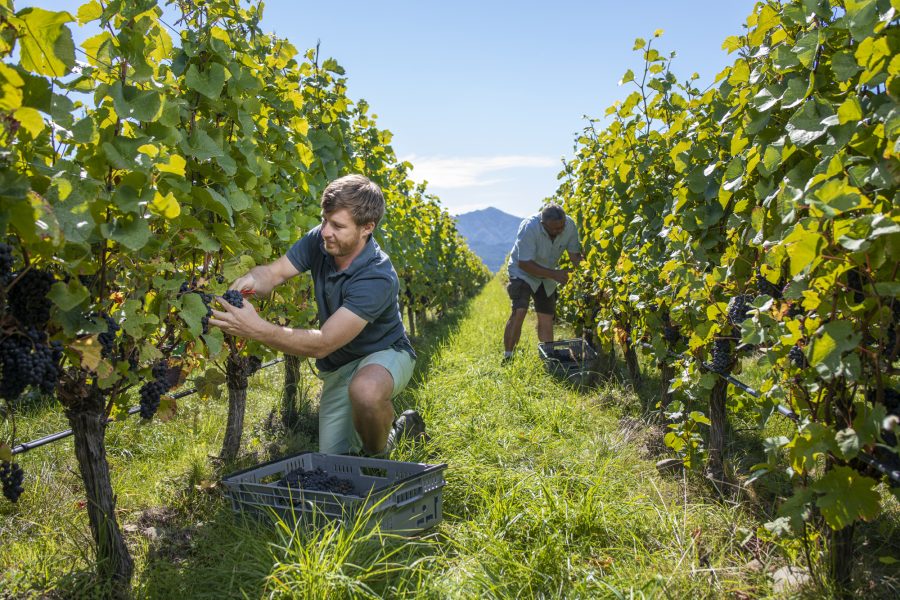
Handpicking in the Clos Henri vineyard. Clos Henri Wines
The 2024 vintage in Marlborough, as described in the accompanying piece, was warm, dry and windy. This comes with assumptions which are understandable, such as very ripe wines, soft acidities and an early harvest. However, Damien Yvon of organic vineyard Clos Henri explains that things are not quite that simple.
Damien is confident that when all of the wines are finally finished, the strategy of waiting it out will deliver qualitative rewards.In fact, the 2024 sauvignon blanc vintage at Clos Henri was their second-latest of their 21 harvests. Additionally, picking happened over a long period, lasting from March 20 until April 19—a full month. Although it is true that the vintage was sunny and the dry, windy conditions resulted in small berries with intense flavours and ripeness, the acidities in the grapes remained high, which was one of the reasons picking was delayed. Damien does not adjust for acidity in his winery, so the team had to wait for acidity levels to drop to a reasonable level before the fruit could be harvested.
Another complicating factor is related to soil, especially since these vines are close-planted and established with minimal irrigation. The winter of 2023 was unusually dry so the season which would lead to the 2024 harvest started with low moisture reserves. This meant that the areas which contain clays, like the Southern Valleys, were better able to weather the drought than the free-draining gravels of the Wairau Valley.
Clos Henri’s vineyard straddles both soil types, sitting across both hillside clays and flatter terrace gravels of the Delta Hill formation near the confluence of the Wairau and the Waihopai. This allowed the vines on clay soils to ripen more consistently and avoid shutdown due to water stress, resulting in a reversal of picking order with the vines grown on gravel (which they call the ‘stones’).
Clos Henri had to wait for autumnal dew precipitation to revive the vines on the ‘stones’ before ripening could resume. They finally picked the fruit for their Otira Stones well after all the Waimaunga Clays had ripened (they also have pinot noir on the vineyard). This change in order has resulted in particularly perfumed wine from the clays, giving them an edge in their youth as they are simply more expressive, but the ‘stones’ give a density and power which will emerge in time.
It does not always play out as planned, but Damien is confident that when all of the wines are finally finished (only the estate sauvignon blanc has been released so far), the strategy of waiting it out will deliver qualitative rewards.