


Does the US trade war affect NZ wine?
 Stephen Wong MW in Free for all
 Become a member to view this article
The Real Review is editorially independent. We don’t sell wine. We are free of influence from vested interests such as wine producers and sellers, and proprietors with conflicts. We tell you what we think about reviewed wines, served straight up. Our articles cover topics our writers choose because of genuine interest.
We rely on our members to publish The Real Review. Membership provides access to thousands of articles, a growing database of more than 160,000 wine tasting notes, exclusive member discounts and more.
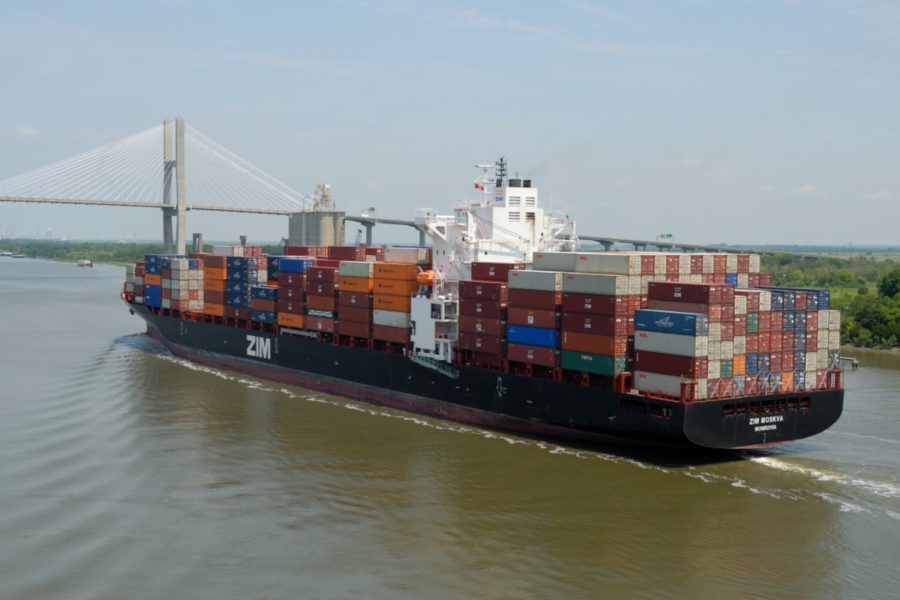
Some producers have already announced that they will reduce their export prices to absorb the tariffs. Pxhere
New Zealand wine has a habit of putting its eggs in one basket (please forgive the analogy, this was written shortly after Easter so eggs and baskets were on my mind). The most obvious example is Marlborough sauvignon blanc.
As mentioned several times on these pages before, it is the overwhelming majority of our production and even more so in export figures, comprising approximately 85% of our export volume, according to New Zealand Winegrowers. But we also have heavy reliance on specific export markets, most notably the US, UK and Australia, though their relative positions have changed in the past two decades.
Almost all of the wine we have going into the US is white, with red wine making less than 1.5% of the total volume of that trade. Of the white wine, it is almost certainly almost all sauvignon blanc.In the years leading up to the Global Financial Crisis (GFC), New Zealand wine producers were heavily invested in the UK market, which had the lion’s share of wine export volume (35-36% in 2006 and 2007) with both Australia and the US sitting at about 22-23% each in the same years.
This all changed during the GFC as Australian companies and supermarkets took advantage of the large availability of extremely cheap sauvignon blanc in the New Zealand bulk market by creating their own brands, virtual brands and capitalising on the Wine Equalisation Tax rebate arrangement between the two countries. This resulted in a massive explosion of volume into Australia, which nearly tripled between 2007 and 2010. In fact, Australia was the leading export market in 2009, 2013 and 2014 with the UK slightly ahead in the other years during this period.
This will come as no surprise to those who recall the ‘savalanche’. All the while, the US market grew steadily from third place in 2008 until it was the largest market in 2016. It briefly lost its lead when the UK grew rapidly again in 2017 until the streak was broken in 2021 when it contracted by 16%. Australia has kept steady but never regained its top position post-savalanche, but the US is firmly in the lead, now representing between 35% (2023) and 37% (2025) of total export volume, an even larger share than the UK had pre-GFC.
This was a deliberate strategic move to try and regain ground lost to price and brand value erosion in the previous strongholds of the UK and Australia. In fact, when export volumes fell sharply in 2022 for those two markets, US exports rallied by a commensurate amount. It is therefore not hard to imagine the deep concern among wine producers who export to the US when the tariffs were announced. At the time of writing, they have been postponed, but producers are rightly worried about their impact on what is now NZ’s largest market.
There is also a bit more nuance to understanding the nature of the US market for NZ wine and how that impacts our producers. Firstly, almost all of the wine we have going into the US is white, with red wine (most likely pinot noir) making less than 1.5% of the total volume of that trade. Of the white wine, it is almost certainly almost all sauvignon blanc. In contrast, though by no means a large proportion, 4% of the NZ wine going to the UK is red and for Australia, that figure is 6%.
Secondly, another vital statistic is the proportion of that white wine which is shipped as bulk wine instead of bottled wine. For Australia, only 24% is shipped in bottle. For the UK, it’s 35%; meaning that the majority of wine going into both of these markets is shipped in bulk tanks and traded in litres. For the US, the situation is reversed, with 62% of the wine shipping in bottle (all of these figures are from the 2024 NZ Winegrowers Annual Report). What this means is that most of the wine going into the US is more expensive than the bulk wine going into Australia and the UK.
This is borne out by the value figures, which show US exports (NZD $787.5 million) amounting to nearly the same value as UK (NZD $440 million) and Australian exports (NZD $370.5 million) combined whereas volumes are 97 million, 69 million and 57 million litres respectively. The impact of tariffs on this relatively higher-value wine will be likely push the wines into different price tiers than currently. On the other hand, it could be argued that the premium end of the market is more able to absorb increases than the very price-sensitive value end of the market. However—to put everything in perspective—at an average of NZD $9.87 per litre for bottled white wine to the US, we’re not really talking about high-end brands.
Some producers have already announced that they will reduce their export prices to absorb the tariffs, which is what US President Trump had hoped would happen. As reported by Stuff, Invivo Wines—who sell their celebrity co-branded Sarah Jessica Parker and Graham Norton wines in grocery chains like Costco and Krogers in the US—will lower their prices ex-winery while also pressuring their distribution partners to trim their margins in an effort to spread the tariff costs across the chain.
There are also murmurings in the sector that New Zealand brands could strengthen their positions by taking a hit in the US to take advantage of other countries withdrawing from the market, although others clearly see this as the ‘sunk cost fallacy’ and recommend joining the global exodus. Ironically, around 2016 to 2019, NZ Wine made efforts to break into China with a string of high-profile events and investment in marketing but the complexity of that market and the pandemic ultimately led them to pursue easier wins in the US. Those wineries which persisted in mainland China and Hong Kong, along with other key Asian markets like Japan and Singapore, have seen a resurgence post-COVID.
Though significantly smaller than the ‘big three’ (all four combined amount to NZD $91 million), they are comparatively high in value, with the average price per litre of total exports—not just bottled white wine—ranging from NZD $18.33 (Singapore) to NZD $13.08 (Japan). Additionally, white wine makes up a comparatively smaller proportion of the total, which further reduces their reliance on sauvignon blanc. This reduces their exposure to the forces which impact sauvignon blanc, like with what happened in 2008.
With the constantly changing landscape of the US trade war, it remains to be seen if optimism alone will see our wineries through these times.Looking inwards, the industry is experiencing tough times with rising costs eating into margins at the same time as both domestic and international sales fall due to economic conditions. The one market which showed growth in 2024 was the US, which is now threatened by Trump’s tariffs. In an interview with Rural News Group, New Zealand Winegrowers Board chair, Fabian Yukich, was quoted describing this situation as “the threat of protectionism in key markets”. Acknowledging that this couldn’t really come at a worse time, with inventory levels remaining high (read: oversupply) despite a smaller vintage in 2024 as sales slow down, Yukich added: “Together these issues are contributing to an increasingly uncertain and unpredictable outlook”.
To counter these worries, New Zealand Winegrower’s chief executive Philip Gregan takes the opposite approach. While admitting that the industry is facing tough times, he insists that the general feeling among producers is confidence in the medium to long term prospects of New Zealand wine, adding that it is possible to answer with an unequivocal ‘yes’ to optimism about both the future and present-day challenges.
With the constantly changing landscape of the US trade war, it remains to be seen if optimism alone will see our wineries through these times. Is it trouble at sea, which we can ride out, or are the winds of change blowing, and if so, which direction will they take us?