


How to find value in pinot noir
 Stephen Wong MW in Top Value Wines
 Become a member to view this article
The Real Review is editorially independent. We don’t sell wine. We are free of influence from vested interests such as wine producers and sellers, and proprietors with conflicts. We tell you what we think about reviewed wines, served straight up. Our articles cover topics our writers choose because of genuine interest.
We rely on our members to publish The Real Review. Membership provides access to thousands of articles, a growing database of more than 160,000 wine tasting notes, exclusive member discounts and more.
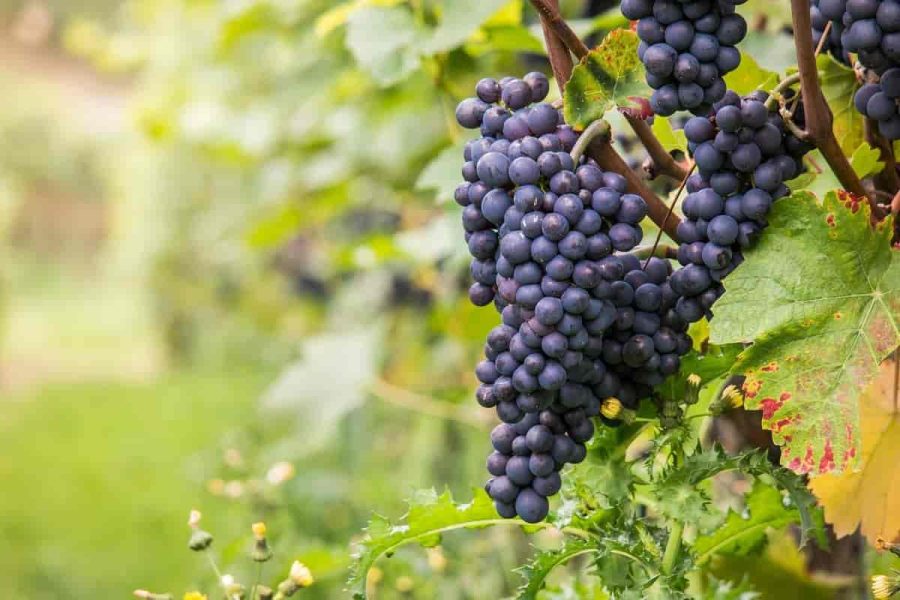
Pinot noir is famously a ‘difficult’ grape to grow, requiring low crops to deliver high quality. Norwegian Encyclopedia
Top Value Wines Feature Week
When the conversation turns to Top Value Wines in New Zealand, there is one particular style of wine which deserves a deeper dive.
Most wine lovers will already be familiar with the wealth of good value to be found in that classic value variety, riesling. Sauvignon blanc also often delivers above its price and increasingly, there are good examples of merlot, malbec and blends thereof. But what about the primary red grape of New Zealand, pinot noir?
Doesn’t this mean that for ‘value’ pinot noir, we’ll always be going for a lesser product? Well, that depends on your definition and view of a ‘lesser product’.Pinot noir is famously a ‘difficult’ grape to grow, requiring low crops to deliver high quality and most of the ‘serious’ examples are also treated to expensive new oak or are scarce, and have their prices driven up by exclusivity or rarity. This lies partly in the standard understanding of quality in pinot noir which stems from the Burgundian context of classified vineyards.
The concept of a specific vineyard having higher potential to create great wine than its immediate neighbour suggests an innate kind of qualitative trait which naturally limits how readily available any single wine can be. There’s also the status quo in Burgundy wherein very few vineyards are monopolies of a single producer, further increasing the number of different wines created from individual vineyards; with the the inverse effect of decreasing the number of bottles made by each vigneron from their parcel.
Contrast this with Bordeaux, where it is largely the producer who is classified, not the specific vineyard. Château Lafite-Rothschild, for instance, could purchase vineyards from an unclassified estate in Pauillac and bottle the wine under their name as a First Growth because of the assumption that it is the producer that is responsible for the high quality, over and above the vineyard itself.
This is not to criticise the Bordelais method—there’s certainly merit in the notion that a good producer will produce good wine, even from ‘lesser’ vineyards, as many who religiously collect Burgundy know. After all, a bottle of village wine from Domaine Comte Liger-Belair is far more sought-after than a grand cru from a lesser negociant. In practice, the Bordelais employ the concept of second wines (and increasingly, third wines) which are selections of ‘lesser vineyards’, younger vines and/or simply more easy-drinking barrels in the cellar.
In New Zealand, we actually adopt both the Burgundian model (i.e. specific sites being higher quality) and the Bordeaux model (of second wines/sub-labels). This naturally leads to more specific origins being regarded as higher quality with prices to match and correspondingly, the most general the origin (and usually, the larger the production the wine), the more affordable it will be. In the instances where second labels exist, they are generally wines which have seen less new oak, usually younger vines with more forward fruit and sometimes higher yields.
So, doesn’t this mean that for ‘value’ pinot noir, we’ll always be going for a lesser product? Well, that depends on your definition and view of a ‘lesser product’.
With fine wine, quality usually includes the implicit acceptance of innate cellaring potential as one of its component indicators. Wines which are able to age and develop over the longer term are considered higher in quality. That is certainly the view in both Burgundy’s Grands Crus and Bordeaux’s Grands Vins. But that does not mean the wines which will not age are bad. In fact, in many blind tastings—and this is something which is often tested in the Master of Wine tasting exam—the ‘lesser’ appellation Burgundy, be it Bourgogne or village, will be more accessible and delicious to drink than a corresponding Grand Cru, which is often very closed, reticent and unyielding at the same age. It can be easy to mistake the ‘lesser’ appellation as the better wine because it simply tastes better at that stage of its life.
It is worth pointing out that there is also now the new wave of pinot noirs which are made to capture immediate enjoyment and juicy fruit which are deliberately not aged or designed to be aged.Applying this to our pinot noirs in New Zealand, we find a wealth of second labels which provide excellent current drinking, e.g. Seresin’s Momo 2023 (93 points) and Snapper Rock’s Cherry Block 2022 (90 points). We also have wines which are estate blends, rather than single-vineyards, providing delicious fruit-forwardness—such as Mountford Estate 2021 (92 points), Jackson Estate’s Homestead 2021 (91 points, a blend of both mature and young-vine blocks), or Tohu’s Awatere 2022 (90 points), which is part of their Manaaki range as distinct from the single-vineyard Whenua range.
It is worth pointing out that there is also now the new wave of pinot noirs which are made to capture immediate enjoyment and juicy fruit which are deliberately not aged or designed to be aged, like the delicious nouveau-inspired Akarua Pinot Rouge 2023 (90 points). These wines may never make old bones with cerebral complexity, but they possess arresting fruit immediacy and will provide delicious drinking today. That, and they won’t break the bank!