


Hidden gems: how to find the best value wines
 Huon Hooke in Top Value Wines
 Become a member to view this article
The Real Review is editorially independent. We don’t sell wine. We are free of influence from vested interests such as wine producers and sellers, and proprietors with conflicts. We tell you what we think about reviewed wines, served straight up. Our articles cover topics our writers choose because of genuine interest.
We rely on our members to publish The Real Review. Membership provides access to thousands of articles, a growing database of more than 160,000 wine tasting notes, exclusive member discounts and more.
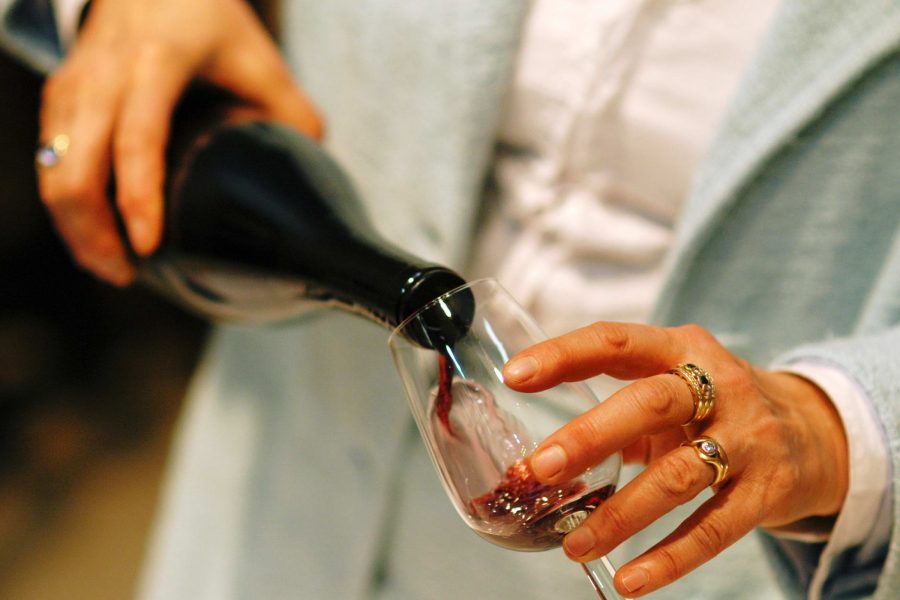
Our ceiling for our annual Top Value wines feature week is $25. Wikimedia Commons

Top Value Wines Feature Week
I’ve never met anyone who says “Show me a really poor value for money wine!” Most people want to feel they’ve gotten good value for their hard-earned dollars. Those who declare “I don’t care how much it costs, I just want the best” are not very numerous.
Our ceiling for our annual Top Value wines feature week is AUD $25. There are many rosés to choose from in that category, simply because most rosé is priced well below $25, and there are few expensive ones.
Riesling is the happiest hunting-ground for true wine lovers, because the average quality is high and price is modest, especially considering the level of quality.Conversely, there are slim pickings in high-grade sparkling wine under AUD $25. This is because sparkling wine of high quality is expensive to produce—one of the most expensive wine categories. The cheaper bubblies are mainly moscato and prosecco, both categories being, in the main, very young and simple wines.
Riesling is the happiest hunting-ground for true wine lovers, because the average quality is high and price is modest, especially considering the level of quality. AUD $25 still buys you some superb riesling in Australia. The first place to look is the Clare Valley where you find Pikes, Jim Barry, Paulett, O’Leary Walker, Leasingham, Taylors, and many more delicious rieslings in their sub-$25 bottles.
Shiraz is also well served by under AUD $25 bottles, simply by virtue of it being Australia’s biggest wine category. However, my feeling is that GSM blends are even better value. Although there are many of these, they are fewer than straight shirazes, but the average value for money is unbeatable in the red wine category. This is not easy to explain. As a generalisation, most wineries would save their best shiraz and grenache wines to bottle as single varietal wines, and funnel their second-rank (or lower) wine into these so-called Rhône blends.
That doesn’t entirely explain why they are such good value. There may be some other reasons. Mourvèdre/mataro is seldom bottled as a stand-alone but usually used in GSM blends, and there is some excellent mataro around.
As well, grenache blends well with shiraz, arguably taking both components to a higher level. The grenache softens and lightens the blend, acting as a foil for shiraz which, in the warm regions that excel at these wines, can be quite big and tannic. GSMs are often lovely to drink straight off the bottling-line.
There was a time when the price of grapes may have been a factor, too. Mataro and grenache were both cheaper than shiraz—although the new fashionability of grenache has put paid to that idea. Grenache is now most likely to be the dearest of the three grapes in a GSM. An MSG of course need not be a Chinese restaurant wine, it’s just a GSM with the ingredients re-prioritised.
As a footnote to this blend discussion, there are now many blends such as TSG (or GST), the T being tempranillo (or touriga), plus creative blends involving other varieties. And no, a GST is not taxed higher.
Shiraz is also well served by under AUD $25 bottles, simply by virtue of it being Australia’s biggest wine category.Sauvignon blanc tends, rather like riesling, to be inexpensive. It is second only to chardonnay in hectares planted and tonnes crushed by Australian wineries. Most sauvignon blanc tends to be uncomplicated, fruit-driven and unwooded wine, which relies on the aromatics of the grape for its appeal. There are some more complex versions which are usually at higher prices, reflecting lower grape yields and more labour-intensive winemaking. But sauvignon blanc under AUD $25 can also provide many bargains. As always, the score and description are your guide.
Finally, chardonnay. It’s the second most prolific grape in Australia, so it stands to reason there should be many cheaper bottles. And there are. Cheaper chardonnay tends to be lightly wooded or not wooded at all. It tends to be simple, ‘fruit wine’ without the complexing factors that more expensive chardonnays feature. And there certainly are plenty of good-value wines under AUD $25.
The best way to find them is to do a search on our ‘Browse’ page. It will give you the chardonnays in the order of the most recently tasted by The Real Review team members.