


Marlborough sauvignon blanc 2025
 Stephen Wong MW in Regional Spotlights
 Become a member to view this article
The Real Review is editorially independent. We don’t sell wine. We are free of influence from vested interests such as wine producers and sellers, and proprietors with conflicts. We tell you what we think about reviewed wines, served straight up. Our articles cover topics our writers choose because of genuine interest.
We rely on our members to publish The Real Review. Membership provides access to thousands of articles, a growing database of more than 160,000 wine tasting notes, exclusive member discounts and more.
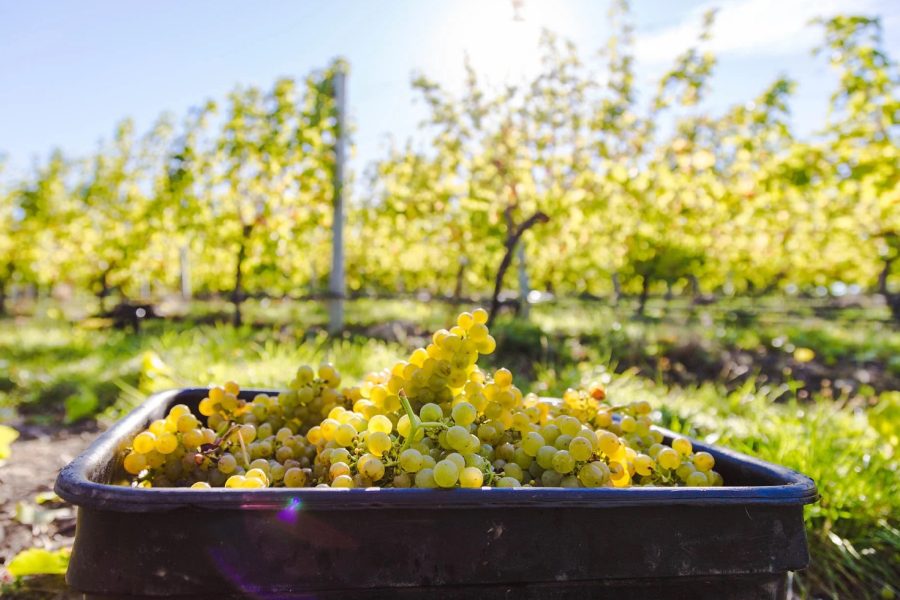
Marlborough still crushed 410,291 tonnes of fruit in 2025. Marlborough Wine (te Pa Wines)
Guide to Sauvignon Blanc & Semillon Feature Week
As summer approaches, the new vintage of fresh, crisp sauvignon blanc sets sail from wineries to glasses all over the world. For a time, Marlborough actually held a literal yacht race from Waikawa Marina (in the Marlborough Sounds) across Te Moana-o-Raukawa/Cook Strait to land in Te Whanganui-a-Tara/Wellington Harbour.
The ‘new vintage’ of sauvignon blanc is perfectly timed for warmer weather, typically seeing a cool fermentation in stainless steel tanks with a short élevage before going into bottle (some producers incorporate small amounts of wild-fermented or barrel-fermented wine in their classic bottlings).
The vintage was able to produce beautiful fruit, but that quality potential was not realised if yields were too high.These young-release wines start entering the market as early as August though most target a September or October release ahead of the busy summer season. It is usually the first chance we get to see how a vintage tastes as this tank-fermented sauvignon blanc is among the earliest released wine from any vintage (increasingly, rosé is competing for that same space, and there are also limited-releases of ‘nouveau’-style reds from more New Wave producers).
When it comes to sauvignon blanc in New Zealand, it is impossible not to default to Marlborough. After all, 90% of the sauvignon blanc in the country is planted in this region and sauvignon represents nearly 90% of New Zealand’s total export volume (for the year to July 2025). Some readers may already be aware of a few statistics about the 2025 vintage but for those who are not, I will outline the key points below.
First of all, let’s address the elephant in the room: the potential volume of 2025 in Marlborough (especially for sauvignon blanc) was huge. This is a result of a combination of climatic and economic factors. The region’s plantings increased by 24% to 29,000 ha from 2020 to 2025 (with more growth yet to be realised as further plantings come onstream). Add to that, almost perfect flowering conditions which resulted in a record-setting potential crop, steady growing conditions without weather complications, and the yield estimates were climbing as the season progressed.
With wineries holding high inventory levels of sauvignon blanc going into harvest and looming oversupply with the volatile global trade conditions, caps were set to reduce how much wineries would take from their growers. For some winegrowers, this was managed earlier through green harvesting and yield management, but for others, fruit had to be left on the vine unpicked to reduce the harvested tonnage.
Even with conservative estimates of between 15 and 20% of fruit being left unpicked (some industry commentators suggest the number was higher), Marlborough still crushed 410,291 tonnes of fruit in 2025: only 1% less than the region’s record-highest crush in 2022 of 414,649 tonnes. Now this is where it gets complicated.
The vintage was able to produce beautiful fruit, but that quality potential was not realised if yields were too high. There is no clear pattern to discern which vineyards carried very high yields and which controlled their yields early enough to benefit from the growing season. Ultimately, it boils down to actual taste and, as they say, the proof is in the pudding. The 2025 sauvignon blancs from Marlborough are very variable and there is a wider disparity of quality between producers than in 2024 for instance—a vintage which one producer in Marlborough summed up amusingly by saying “You had to really **** things up in 2024 to make a bad sauv”.
So, based purely on the early-release Marlborough sauvignon blancs which have been assessed, how does 2025 taste? As a broad generalisation, it tastes archetypal and textbook, for better or for worse. The wines are aromatic and up-front with that classic combination of herbaceous and gooseberry. By contrast 2024 tastes more concentrated on the whole with richer mid-palate density and floral nuances rather than herbaceousness (which may not suit some sauvignon drinkers). 2025 has more classic flavours.
Many of the wines I saw also changed significantly in the glass, losing that aromatic intensity over time, suggesting that those who prize those aromas will prefer them on the younger side (i.e within the next eight to 10 months). Some wines exhibit a bit more discernible sweetness on the finish, too, either because they have a bit less stuffing or because winemakers are using some sugar to give palate weight and emphasise the fruit flavours. Conversely, the lighter and more austere styles often exhibited a distinct salinity which is likely a function of acidity, phenolics and volatile sulfur compounds (part of the varietal expression) being more evident when fruit concentration is lighter.
This is not to suggest that there aren’t good wines in 2025. The better of these early-released examples highlight the ripeness of the season through juicy, perfumed fruit, some even tipping over to tropical notes and passionfruit (which admittedly can be a yeast thing) alongside crisp, green notes which are not overtly vegetal.
There is a whole cadre of producers who have taken advantage of 2025’s less dominant vintage character (compared to 2024, at least) to allow their sites to express themselves with very careful and sensitive use of winemaking influences. There are a number of innately complex, mineral and well-balanced wines which capture the imagination and taste distinctly different than their peers without overtly displaying winemaking artifice.
In summary, 2025 is a vintage where careful choice matters as quality is variable across the region.The best of the 2025s tasted so far also have finesse and perfume rather than raw power and concentration, which can suit those looking for more aromatic and immediate wines.
Lastly, as is clear from the recent ‘grand’ sauvignon tasting in Marlborough of about 100 new releases, the wines which are aged for more time in the winery, be it in tank, oak (usually neutral) or other vessel, are well worth waiting for. Releases of these styles from 2024 and 2023 were show-stopping in quality—although granted, these are ‘reserve’ level wines which warrant longer élevage. We can expect some of the best 2025s to be released according to the same schedule, although they will show more overt winemaking than the fresh, crisp, young-release wines.
In summary, 2025 is a vintage where careful choice matters as quality is variable across the region. There are plenty of easy-drinking immediate-enjoyment wines but serious producers have also crafted a number of wines with site expression and transparency, taking advantage of a less-overpowering vintage character in 2025. The best wines may yet to be released.