


How to pair chardonnay with food
 Stuart Knox in Food and Wine
 Become a member to view this article
The Real Review is editorially independent. We don’t sell wine. We are free of influence from vested interests such as wine producers and sellers, and proprietors with conflicts. We tell you what we think about reviewed wines, served straight up. Our articles cover topics our writers choose because of genuine interest.
We rely on our members to publish The Real Review. Membership provides access to thousands of articles, a growing database of more than 160,000 wine tasting notes, exclusive member discounts and more.
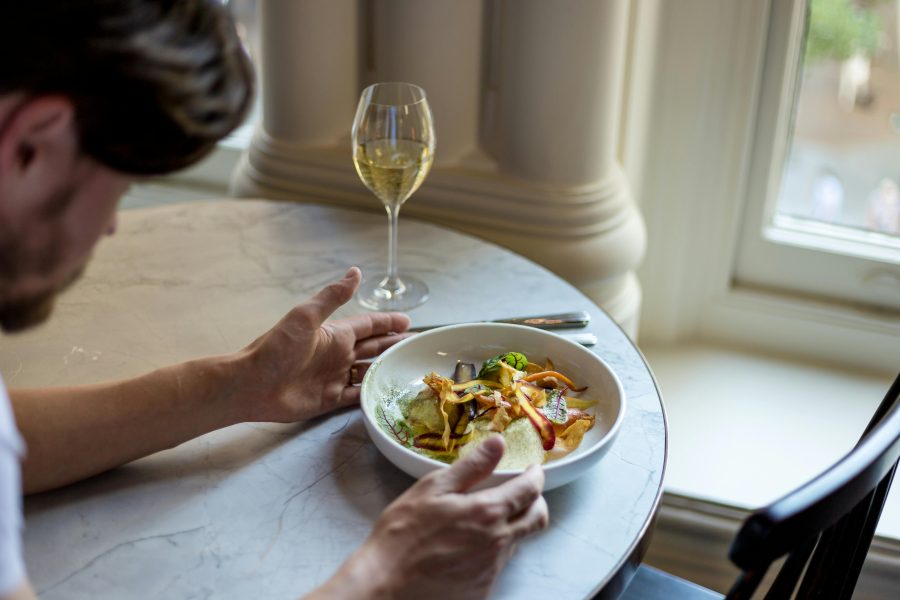
Food and wine matching is always a fun experience and often the finished product is more than the sum of its parts. Pexels
Guide to Chardonnay Feature Week
Chardonnay is often called the winemaker’s wine. As a variety it offers a wide and stable base on which winemakers can build, and a multitude of weights and styles can be produced. Because of this, chardonnay offers a very wide variety of food matching options depending on the style of wine you’re looking to match.
To me a good chardonnay and roast loin of pork is a fantastic combo.As with all food and wine matching, beauty is in the eye of the beholder but for this exercise let’s work on the assumption that we all love chardonnay, even those that ‘hate chardonnay’ but love Chablis. Whenever we’re looking at matching food and wine the first decision that needs addressing is: are we looking to match flavours and textures or instead trying to contrast them? I generally find that medium to full bodied whites suit best to match flavours and textures because the structural elements we would use to contrast are often more background and guiding than the driving force of the wine. However, like all rules there are always exceptions.
Because of the chameleon nature of chardonnay I’ll break it up into three brackets of style. Firstly, the light, unoaked styles that we might describe as Chablis-esque. Second, the largest bracket, the medium bodied modern style, of which Australia is in the upper echelon of production. And finally the full, rich buttery styles, not as common as they once were but they still have a place in the discussion.
The lighter style of chardonnay such as Chablis are built around delicate fruit, apple and some subtle stone fruits, and often acidity is higher as they usually come from cooler regions. Depending on the local terroir, a chalky or saline minerality is also noted and this is often the driving factor when matching food to these wines. Saline, sea shell and sea breeze are all descriptors that are used around that minerality, and give a solid clue as to the foods we might match to these wines. Yes, seafood.
Because of the light and delicate nature of the fruit and body of these wines I lean into simply prepared seafoods. Thinking cold shellfish or lighter white meats, but still more often cold than warm such as rillettes or chicken terrine. Another favourite of mine with these wines is rich creamy white mould or washed rind cheeses, this is where the acidity comes more into play to cut through the cheeses’ richness yet that saline minerality works in harmony with the salty nature of the cheese.
Modern chardonnay is a broad brush but the pendulum of style is in a really sweet spot for chardonnay currently. Oak is widely used but with subtlety and deftness, balancing more powerful stone fruit, citrus and pushing into pineapple characters. These modern styles still maintain a good acidity to drive them and keep an innate freshness to the experience. To round them out, reductive winemaking often adds a sense of smoky or flinty character, on occasion a little too much, but most have this balance worked out by now. These are complex and powerful wines: there’s often multitudes of layers and a density to the texture so they require food that won’t be overpowered by them and can offer some extra nuance to the experience.
To break it down, stone fruits, apple and pineapple are all fruits we see in chardonnay and every one of those has been paired with white meat or fish at some stage in its life, even if you’re not a Hawaiian pizza fan. This combo works because the protein has good flavour but isn’t overbearing, and like chardonnay itself, it takes on the flavours of its preparation. The base of the dish that suits it can be chicken, pork, white fish like snapper or even tofu.
Next we look at the acidity. It’s usually at medium level so we would like something with a bit of fat to use that acidity as a cutting agent. The fat could be intrinsic, such as a pork roast, or an addition like a light butter or cream sauce. The final part is that flinty character, that will sing with salty notes and also roasting characters, browning in a pan or baking at high heat. To me a good chardonnay and roast loin of pork is a fantastic combo.
The final bracket of chardonnay are the big boys, rich and buttery, golden-straw in colour. We all know the style and while it’s not the favoured style currently, it still has its place. These matching ideas will also work for aged chardonnays.
As an ideal, a lemon, tarragon and butter roasted chicken with a great old rich chardonnay is something everyone must try.Pineapple, yellow peach, nectarine, all descriptors often seen with these wines and again they’re big and powerful flavours but not particularly savoury, so a white protein is still your best base. Because of the in-built power, though, we can branch into oilier fish such as salmon or trout and veal is also a good option. ‘Buttery’ as a description is a fantastic clue for saucing these dishes. Butter is a great base for cooking so many foods, and it matches so well to the creamy texture of these wines.
If it’s an aged chardonnay that is being matched, all this still holds true. With age comes complexity though, so I’d look to keep the amount of flavour to a minimum—simplicity being a virtue—to allow the wine to shine in the context. As an ideal, a lemon, tarragon and butter roasted chicken with a great old rich chardonnay is something everyone must try.
Food and wine matching is always a fun experience and often the finished product is more than the sum of its parts. The best part of this is the experimentation and right now, with the quality of chardonnay available, the end result is unlikely to be anything but delicious.