


Wine with hot spice
 Stephen Wong MW in Food and Wine
 Become a member to view this article
The Real Review is editorially independent. We don’t sell wine. We are free of influence from vested interests such as wine producers and sellers, and proprietors with conflicts. We tell you what we think about reviewed wines, served straight up. Our articles cover topics our writers choose because of genuine interest.
We rely on our members to publish The Real Review. Membership provides access to thousands of articles, a growing database of more than 160,000 wine tasting notes, exclusive member discounts and more.
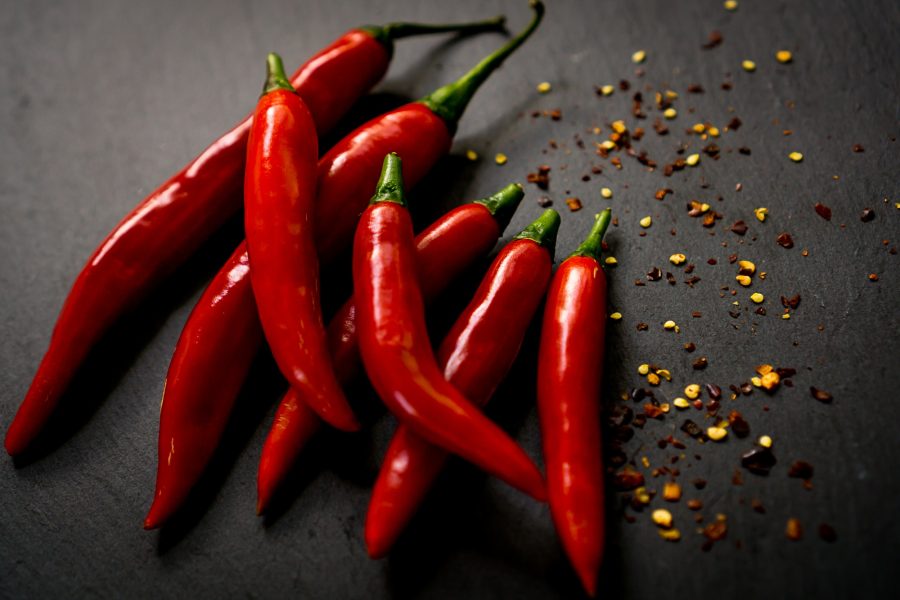
When isolated, the capsaicin in chilli causes reactions when it is in contact with our mucous membranes. GoodFon
Hot chilli spice, particularly with the influence of various South-east Asian, South Asian and Southern Chinese cuisines, has become more common in Australia and New Zealand over the past two decades. Whether in a traditional form or in fusion food, hot spices pose challenges for wine which did not previously exist in classical sommelier training, where the dominant focus was on European cuisine—France, Italy and Germany.
Wines like albariño and gamay tested very positively whereas riesling, viognier, gewürztraminer, pinot noir, syrah and cabernet sauvignon tended to test poorly.Throughout the early 2000s, it was common for younger sommeliers to be told that Alsace gewürztraminer was the wine to pair with spice and this recommendation was found in restaurants serving everything from Madras to gong bao ji and pad krapao to laksa. In my previous roles working in hospitality, I found these rarely worked in practice, and menu development tastings would often yield negative interactions between the wine and the heat.
So, were these well-respected European writers and sommeliers wrong? Not necessarily: it is possible that this common error arose due to a misunderstanding of the word ‘spice’. Gewürztraminer is indeed often described as ‘spicy’, though it does not refer to chilli or hot spice. The only heat which is found with any regularity in gewürztraminer comes on the palate and is a result of elevated alcohol levels (14% and above), due to the variety’s tendency to develop full phenolic ripeness at high sugar levels.
Extensive testing with both components and full dishes involving chilli suggested a very different outcome. Wines like albariño and gamay tested very positively whereas riesling, viognier, gewürztraminer, pinot noir, syrah and cabernet sauvignon tended to test poorly. There has also been a lot more scientific study of chilli in the past three decades.
When isolated, the capsaicin in chilli causes reactions when it is in contact with our mucous membranes. The actual biological mechanism involves the Transient Receptor Potential Vanilloid 1(TRPV1) which is part of a super-family of sensors which perform a wide range of sensory functions in the body, but more specifically, it is one of a smaller set of six temperature-sensing receptors (which explains why we detect capsaicin as ‘heat’). It’s a relatively newly discovered receptor, being isolated in humans as recently as 1997. We know that milk is good at neutralising it because casein helps create an emulsion with the fat and water in it. Capsaicin is fat-soluble so water alone will not help. This allows us to remove the molecule from contact with the TRPV1 receptors.
This is no help, of course, when it comes to wine as we don’t have significant levels of fat or casein in wine to replicate this process. However, chilli in food does not exist in isolation; often there will be some fat present so the following findings could help you in planning your own wine matches for spicy food. To make things simpler to follow, they are broken down into structural components.
Sugar
Sugar has a positive and calming reaction on spice. The prevailing theory is that it works as a palate cleanser and can mechanically help with removal of the capsaicin from physical contact, though it is less effective than the fat/casein/water emulsion at doing so.
Temperature
Cooler temperatures have been shown to reduce the perceived impact of the heat caused by capsaicin. This is due to the temperature-sensing and temperature-activated nature of the TRPs.
These receptors work within a relatively narrow band of temperatures so lowering the temperature of the surrounding tissue will lessen their effectiveness. It also triggers the temperature ‘response’ which is an expected outcome of sensing heat. When the body senses a lowering of temperature, it takes that to mean that the ‘signal’ has done its job and can be deprioritised.
There is also a hypothesis that the activity of TRPV1 could be the reason for capsaicin’s ability to lower body temperature via hypothalamus activity (there are TRPs located there too, though obviously not ones which capsaicin in hot food can reach!) If you have ever wondered why people who live in tropical countries consume chilli in larger quantities, this might be an explanation. It is also why consuming very spicy food can cause some people to sweat, as it is the body’s attempt to lower its temperature.
Alcohol levels
Perhaps unsurprisingly, higher alcohol levels have a negative interaction with capsaicin. We already perceive higher alcohol in the mouth as ‘warmth’ or if high enough, as a ‘burn’, so that exacerbates the effect of both the chilli and the alcohol. Lower alcohol levels do not have this negative effect.
Acidity
The effect of acidity levels varies depending on the presence of other components, though very high acid levels test less well in menu tastings than more moderate ones. This interaction was often described as having a ‘searing’ quality, which is akin to salt on a wound. However, this was not observed if there was a high fat sauce or other source of fat present as it would form an emulsion like it does in milk.
Tannins
High tannin wines, in the absence of other mitigating factors like fat or sugar, have a somewhat negative interaction with chilli. The action of tannin, which binds preferentially with the proteins in our saliva and thus rendering it ineffective as a palate cleanser or neutraliser interferes with the body’s own mechanism for removal of chilli.
Complexity and nuance
Lastly, complexity and nuance in wine tends to have a negative interaction since the sensory apparatus are preoccupied with the ‘burning’ sensation on the immediate tissues. Conversely, intense fruit flavours tend to elicit a more positive response since they are able to ‘punch through’ the burning and still make themselves felt.
Wines which are traditionally served colder also help mitigate the spice.With these interactions in mind, it is perhaps unsurprising to see why gewürztraminer did not always work. Most gewürztraminers have quite high alcohol and, increasingly, many are dry rather than sweet. They also rely on a lot of perfume for their appeal, something which is lost in the match. Albariño on the other hand, particularly those from Spain’s Rias Baixas, tend to have an off-dry level of sugar in them and lower alcohol levels.
Wines which are traditionally served colder also help mitigate the spice, and complex, subtle wines like pinot noir or méthode traditionnelle sparklings lose most of their finesse and nuance whereas a slightly chilled, fruity and bright-tasting gamay shows well despite being ostensibly a simpler wine. Keep in mind that as spice levels rose, our testing generally found fewer and fewer wines worked until none were considered suitable as a match.
Hopefully, this sparks some curiosity to test out these theories for yourself and in the process, find a glass of wine which can accompany a spicier dish.
In my experience when people speak of spice they usually mean chilli, but for me there are other far more challenging things. Turmeric, a spice used lavishly in Indian cuisine, is enemy number one for me, palate coating, unpleasantly pungent and dominating, and definitely not wine-friendly. On the other hand I love a side dish of chopped fresh chillies as a condiment with Cantonese or Vietnamese cuisine, or some chilli sambal with Malaysian. Cool unoaked whites ranging from Riesling to Chablis work well with this for me, so too do lighter pinot noir and gamay-based reds, but anything with high alcohol and elevated tannins is just too much of a challenge.
Sparkling red!
Good call, Frank!
I recall the time when Gewurztraminer was promoted as the match with spicy cuisine. The purity and light lychee fragrance of the cool climate Victorian GT’s such as Delatite and Straw’s Lane were often excellent matches with spicy fish, in the same fashion that any fragrant tea might have been. Much better suited than the higher alcoholic and heavier GT’s from Alsace.
A step up in enjoyment, for me, is German Kabinett Riesling particularly when paired with spicy chilli prawns. Served cool, the residual sugar and low alcohol, fresh burst of acidity all factors that seem to work.
Meat based spicy cuisines perhaps require bigger, bolder wines. I have long been a supporter of Australian Sparkling Shiraz, which is my preferred wine to handle the heat of say Southern Indian style cuisine. Here a little bit of that frowned upon residual sugar sweetness proves beneficial. I cannot understand why the style is not more popular.
Thank you Stephen, very well considered article.
Re alcohol levels and spicy food. Many affluent Thais drink whisky on ice with their food.
I often/usually drink reds with spicy food. Sometimes sparkling reds, usually still reds, usually Shiraz/Grenache/Durif rather than Cabernet which doesn’t work well.
High oak and high tannin are negatives with spicy food, high alcohol not so much of an issue
An enduring memory for me is the amazing match of searingly hot Surat Thani market food with a Warrabilla Parola’s Durif at about 17% a/v, just stunning.